








The Daily Dish
October 30, 2026
BEA Data Dump
Yesterday the Bureau of Economic Analysis (BEA) delivered its first estimate of 3rd quarter gross domestic product (GDP) and the related September data on personal income and outlays. The latter is the source of the Federal Reserve’s preferred measure of inflation, the personal consumption expenditures (PCE) price index.
Unsurprisingly, this is the bad news. PCE inflation jumped to a 6.1-percent annual rate in September and pushed the year-over-year inflation up to 3.6 percent. Energy prices are an important aspect of this story; gasoline and other energy goods prices jumped at an annualized rate of 188.9 percent in September. The president has all but promised an aerial assault on Iran after Election Day, so further energy price increases may be in the offing.
Turning to core inflation – which excludes food and energy prices – reveals underlying, stubborn inflation. Core was 3.9 percent in September and up 3.1 percent year over year. Core PCE inflation has been within a few tenths of a percent of 3.0 percent since December 2023. This is the Fed’s biggest problem and the reason it should have hiked this past Wednesday (but blinked because of the proximity to the election) and must hike further in December.
The GDP report, in contrast, contained a lot of strength. The topline was 3.4 percent annual growth, but the most eye-catching was the artificial intelligence-led investment boom. Non-residential fixed investment grew at a 9.4-percent annual rate, led by equipment investment growing at 20.9 percent.
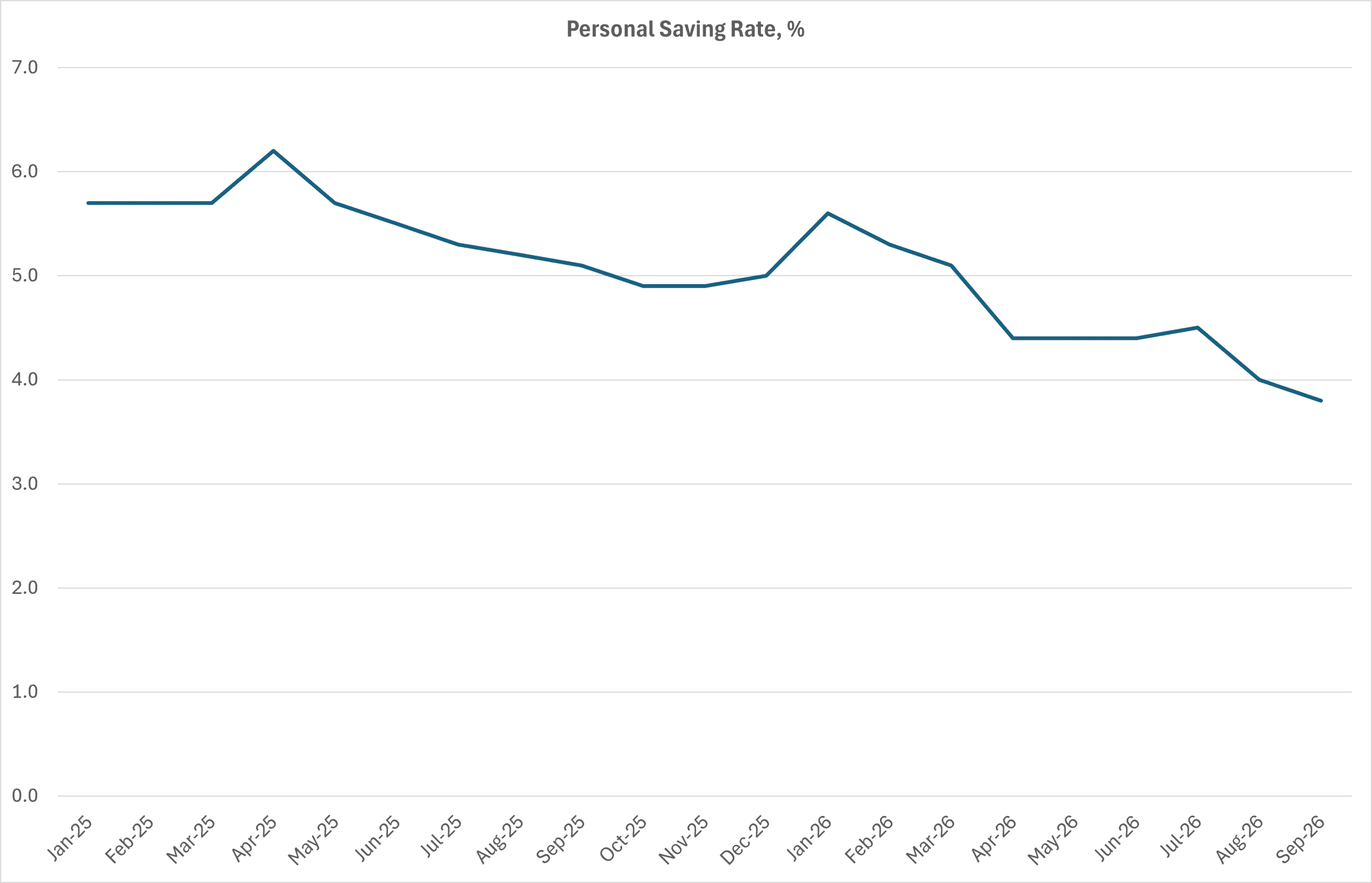
The household sector weighed in with 3.8-percent growth in personal consumption expenditures. An obvious question is why consumers are so gloomy when they are able to spend at such robust rates. Part of the answer is probably in the chart shown below. Consumers have managed to continue to spend only by sacrificing the pace at which they save – keeping up their lifestyles is coming at the expense of the future. And in the most recent data, spending held up overall, but spending on recreation declined by $14 billion.
The Fed’s challenge is obvious. The risk it faces, however, is that the household sector has some downside risk that rate hikes may exacerbate.
Fact of the Day
Since the start of 2026, the federal government has published $1.36 trillion in total regulatory net cost savings and 153.1 million hours of net annual paperwork increases.