The Daily Dish
March 25, 2025
Biden Climate Policy
Joe Biden launched his presidency with an executive order entitled “Tackling the Climate Crisis at Home and Abroad.” It said, in part:
It is the policy of my Administration to organize and deploy the full capacity of its agencies to combat the climate crisis to implement a Government-wide approach that reduces climate pollution in every sector of the economy; increases resilience to the impacts of climate change; protects public health; conserves our lands, waters, and biodiversity; delivers environmental justice; and spurs well-paying union jobs and economic growth, especially through innovation, commercialization, and deployment of clean energy technologies and infrastructure.
The Biden Administration was fond of touting its climate policy efforts as unprecedented and aggressive. Certainly, they were a key part of the administration’s astonishing $1.8 trillion regulatory burden, which featured extremely costly rulemakings designed to eliminate gasoline-powered automobiles. And climate was the driving force behind the trillion-dollar clean energy credits in the Inflation Reduction Act. The administration also featured a special envoy for climate issues – first John Kerry and then John Podesta – although Eakinomics cannot recall a single important announcement from either.
All of this got Eakinomics thinking: How successful was the climate policy? And, as a corollary, what will the Trump Administration’s U-turn likely produce?
The chart (below) shows carbon dioxide emissions annually since 1990. It shows the clear inflection point in the Obama Administration years, as well as the trend line for emissions in the years since the peak. The surprising result is that the final year of data, 2023, is right on the trend.
This suggests a conclusion that the Biden climate efforts didn’t accomplish a thing, which is roughly true with one important caveat: The time period is very short. While more time may not have produced any significant international breakthroughs, it could have allowed for the regulatory framework to drive electrification and the clean energy tax credits to support those regulations.
Nevertheless, the results are disappointing and a reminder that it is better to have a well-designed and efficient carbon mitigation policy than to simply throw regulatory and legislative money at the problem.
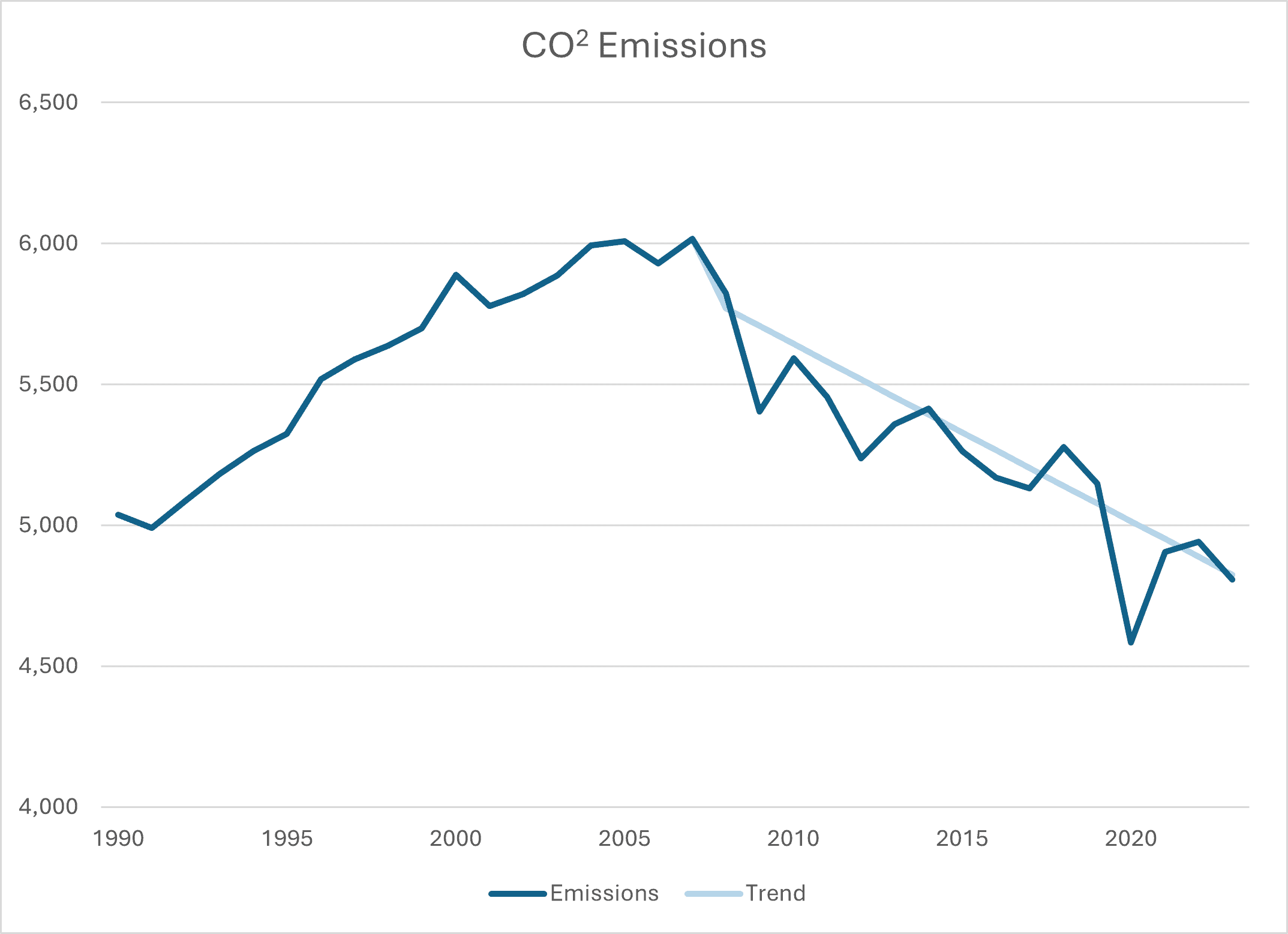
(Data are from the U.S. Energy Information Administration.)
Fact of the Day
Across all rulemakings, agencies published $1.2 billion in total costs and added 6.2 million paperwork burden hours.