








The Daily Dish
October 20, 2026
Housing and the Larger Economic Challenges
The housing market is down, weak, depressed…pick your descriptor. The latest evidence? The Wall Street Journal reported:
The NAHB/Wells Fargo Housing Market Index, a gauge of builder confidence in the market for newly built single family housing, fell three points to 29 in October. That is the lowest reading since June 2012. …
Prospective home buyers are being deterred by mortgage rates that have climbed well above 7% in recent weeks, along with higher gas prices and inflation, NAHB Chairman Bill Owens said Monday.
Housing activity mirrors the index, with housing starts at 2012 levels as well.
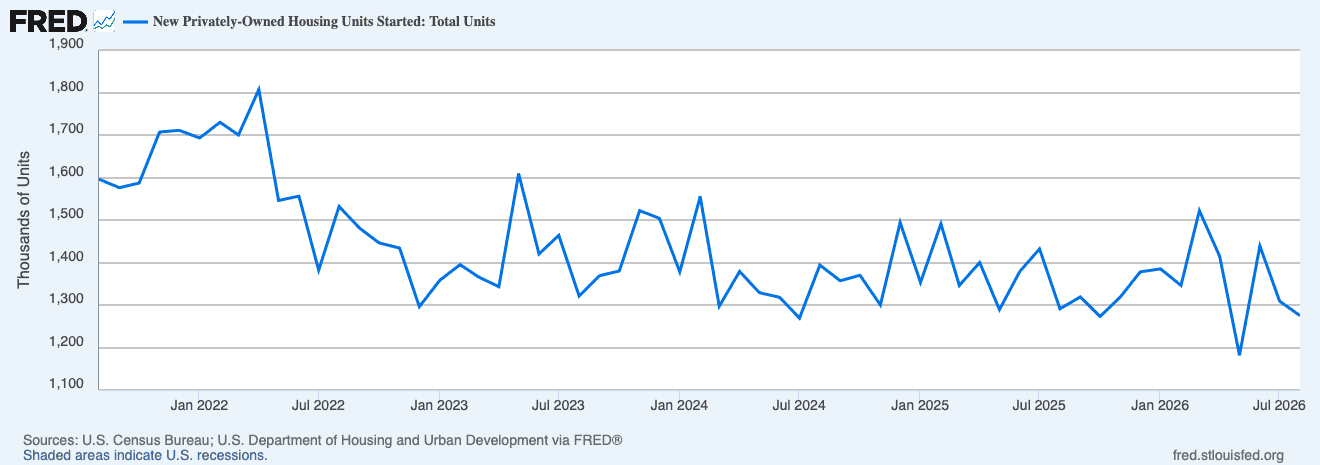
There have been many challenges – among them, a massive tightening of immigration policy that has made construction workers harder to find and retain. As the graph below shows, the number of workers peaked during the Biden Administration and has fallen since.

These data are reflective of a housing market that has essentially ground to a halt. This has implications far beyond the housing market alone. Normally, when the Federal Reserve chooses to fight inflation, it raises interest rates. At present, the Fed has raised modestly, but market forces have driven rates up even farther. The interest rate on a 30-year, fixed-rate mortgage has approached 7.5 percent recently.
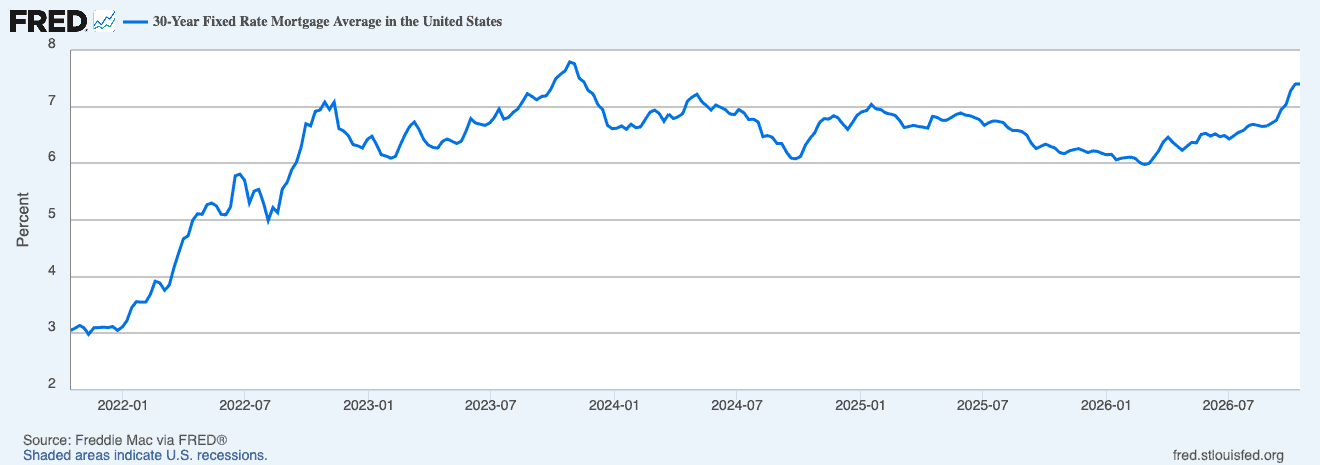
Normally, the mortgage rate increase is an important part of the transmission of anti-inflation policy. The rise in mortgage rates reduces the demand for houses, a signal that leads builders to slow housing construction. And if one doesn’t build a house, there is no demand for the furnaces, air conditioners, dishwashers, stoves, ovens, refrigerators, and other goods and services that go into a house. This causes a downshift in the broad supply chain for housing and eases pricing pressures across a large swath of the economy.
But if the housing sector is already at a standstill, higher mortgage rates do not further slow housing starts, which does not lower the demand for housing inputs of all sorts. As shown in the chart (below), industrial production continues to rise. And rather than getting some disinflation, pricing pressure remains high.
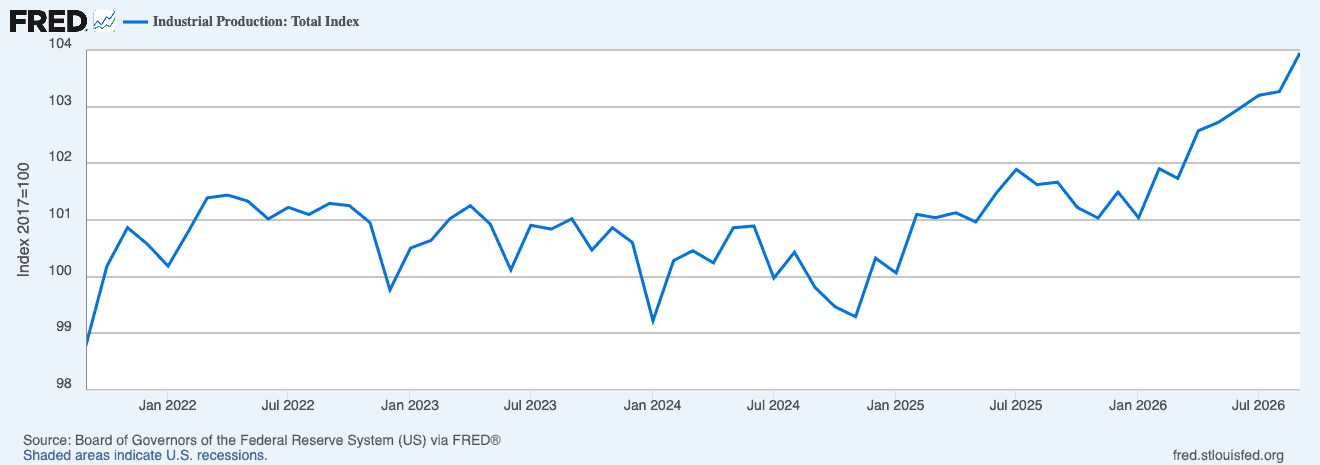
In short, the housing slump is a story in itself. But the fact that it cannot play its usual role in transmitting disinflationary pressures means that the Fed will have to work even harder than usual to wrangle inflation down to its target.
Fact of the Day
As of October 14, the Fed’s assets stood at $6.8 trillion, up $8 billion from the prior week and over $159 billion higher than a year ago.