The Daily Dish
September 14, 2026
Inflation and the Fed
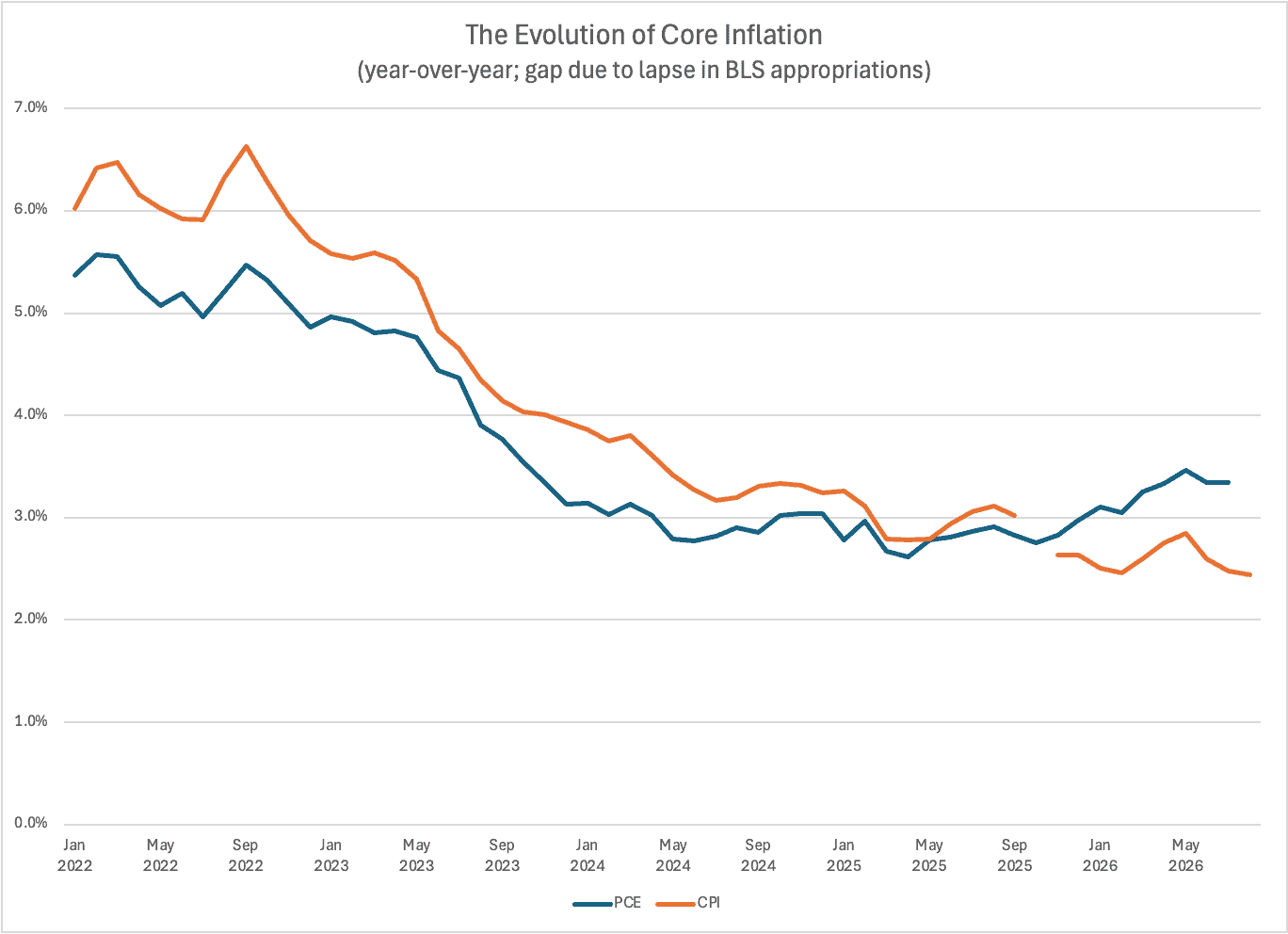
Friday saw the release of the August report on the Consumer Price Index (CPI). The report matched expectations. Overall CPI rose at an annual rate of 3.9 percent, yielding year-over-year inflation of 3.4 percent. Core (non-food, non-energy) inflation came in hotter than expected at a 3.3-percent annual rate. It now stands at 2.4 percent year-over-year.
The chart below shows the path of core CPI inflation since it hit its recent peak in 2022. Also shown is core inflation as measured by the Federal Reserve’s preferred personal consumption expenditure (PCE) price. After rapid initial disinflation, progress toward the 2.0-percent target has slowed dramatically, and even reversed to a degree. While some are quick to point to one-off recent events such as tariffs or hostilities with Iran, the reality is that the core does not reflect energy price spikes – and little real progress has been made in the last two years.
The Fed has a dual mandate for full employment and price stability. On the employment side, unemployment is in the low 4s and has been for some time. The labor force is growing slowly, if at all, so few jobs are needed to keep unemployment down. In short, the employment mandate is in good shape.
The inflation mandate, then, should be the focus – and the recent uptick in core inflation is a sign that policy is too accommodative. The Fed would be wise to raise rates by 25 basis points at the next meeting and, likely, again later in the year. The president will “fuss,” to be sure. But while the data may not be definitive about a hike, they have shut the door on lowering rates.
Fact of the Day
Health care employment rose from approximately 18.14 million in August 2025 to 18.52 million last month, an increase of nearly 379,000 jobs.