








The Daily Dish
November 4, 2026
Labor Market Slowdown
Each month the release of the Bureau of Labor Statistics employment report is a red-letter day at AAF. But over the course of the Trump Administration, the focus has shifted from “jobs, jobs, jobs” to “money, money, money.” The cumulative impact of sustained low fertility, the retirement of the Baby Boom generation, and the essential cessation of immigration has produced a slowly growing or even declining labor force. As a result, it takes very few new jobs each month – the United States has averaged about 40,000 – to keep the unemployment rate down near 4 percent.
These days the number that matters most is the growth rate of average hourly earnings. If roughly everyone is employed, it is wage growth that will deliver more labor income. But the growth rate of average hourly earnings (shown below) has tailed off steadily to the point that it has fallen below the inflation rate in 2026.
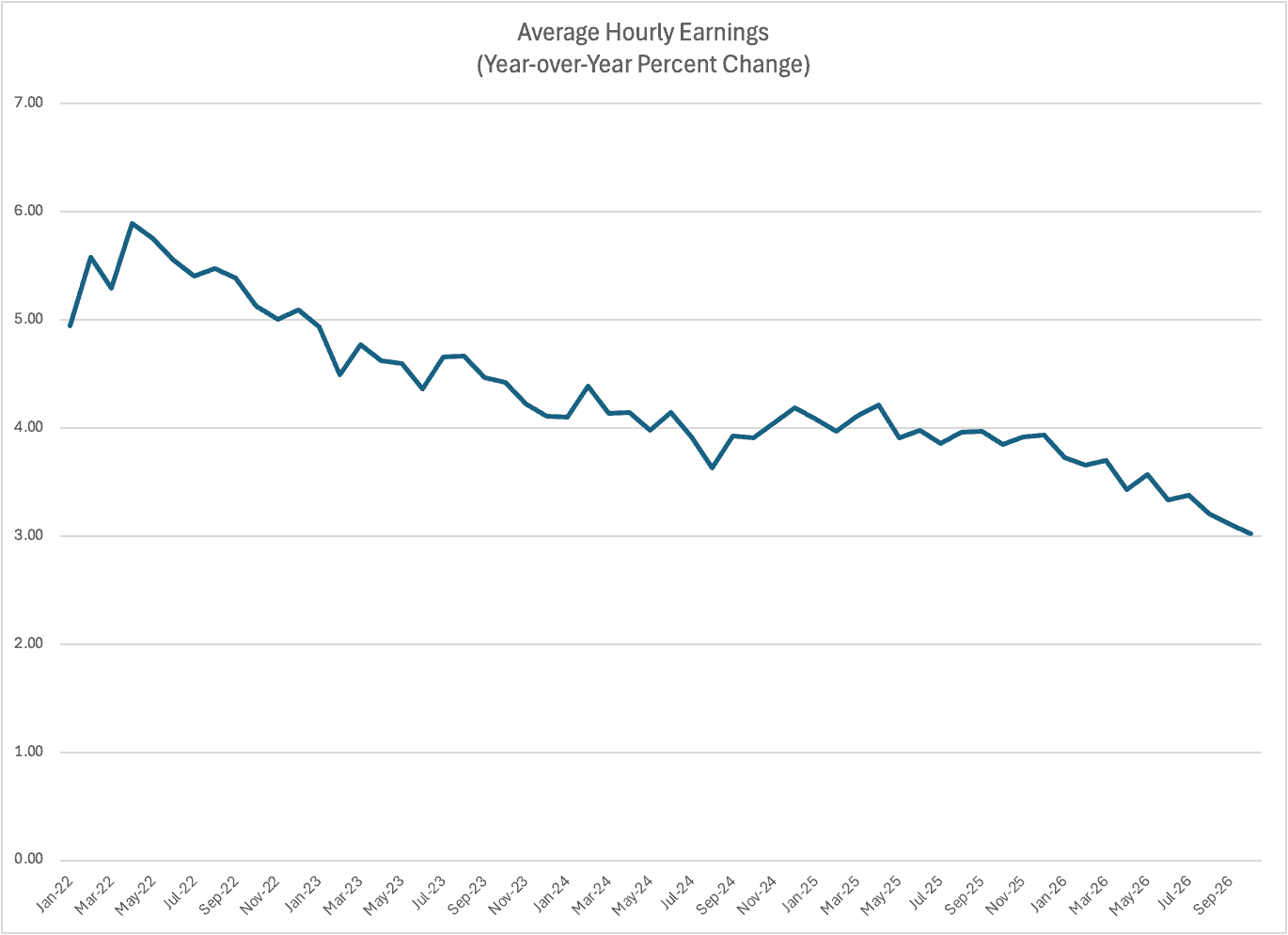
Part of the reason is that the Trump labor market is somewhat stagnant. It has been characterized as “nobody gets fired, but nobody gets hired.” The lack of dynamism is also reflected in the steadily declining quits rate. As shown below, since 2022 the percent of workers quitting each month has declined by one-third – from 3 percent to 2 percent. Gone are the days when workers were jumping ship for attractive offers elsewhere.

Why not? Because the offers elsewhere have become less attractive. The final figure (below) shows the difference in year-over-year wage growth between those who take new jobs (“job-switchers”) and those who stay in their current job (“job-stayers”). These so-called wage premia had gotten to the vicinity of 6 percentage points; they are now in the vicinity of 3.5 percentage points.
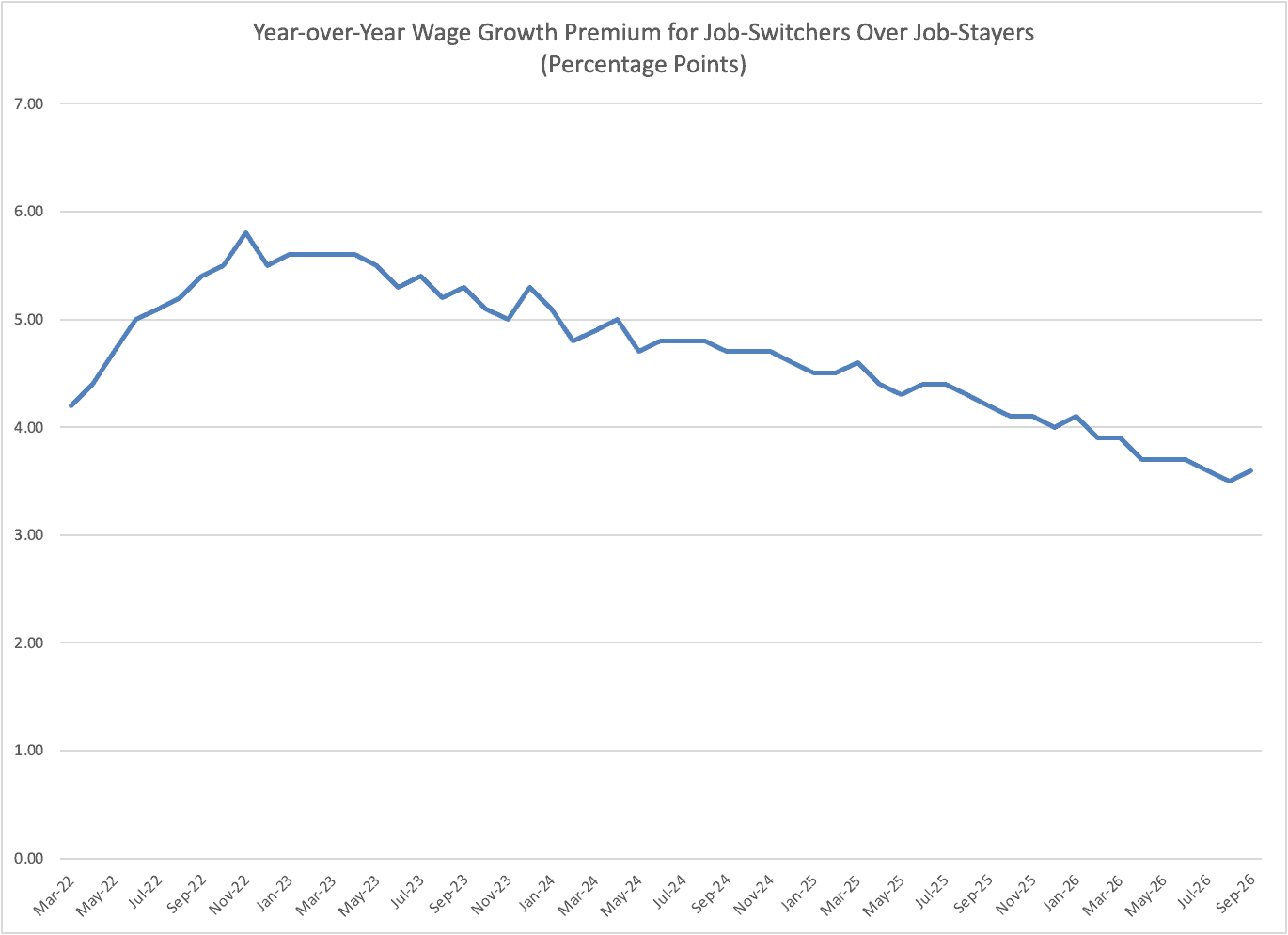
The bottom line is that the labor market is seemingly becoming less dynamic each year, a far cry from the great upheaval predicted to emanate from artificial intelligence.