The Daily Dish
May 19, 2026
The Outlook for Housing Affordability
“Affordability” is the early leader for word of the year winner. And among the many contenders, housing may have the biggest perceived affordability problem. So what is the outlook for housing affordability ahead of the midterms? A few pictures are worth a million words (there’s been word inflation, too).
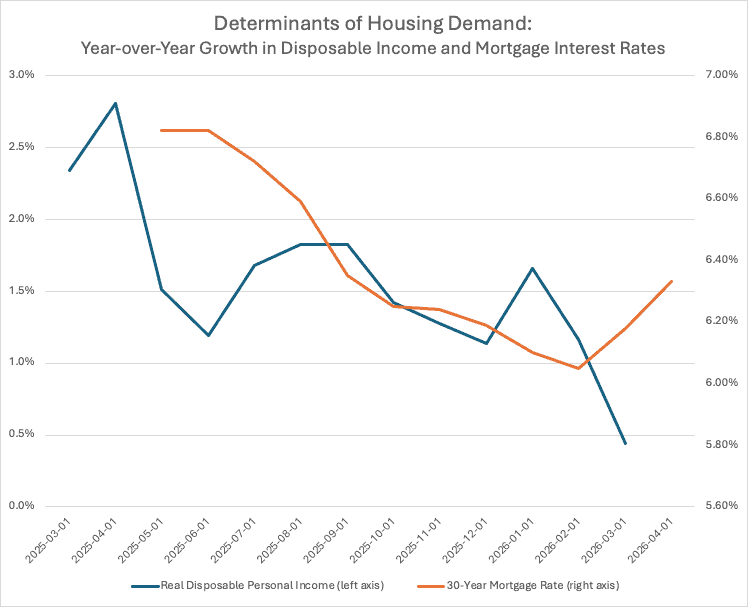
Shown below are the year-over-year growth in real disposable personal income (left axis) and the interest rate on 30-year fixed rate mortgages. Disposable personal income is all income minus taxes, and adding back in transfers from government. Adjusted for inflation, it is a measure of resources available to pay for goods and services – including housing. The bad news is that the growth of real disposable income has been tapering off and is now perilously close to zero.
Similarly, mortgage interest rates have reversed their decline and have jumped up recently. The combination of higher rates and slower income growth is likely to produce a slow spring sales season and downward pressure on prices.
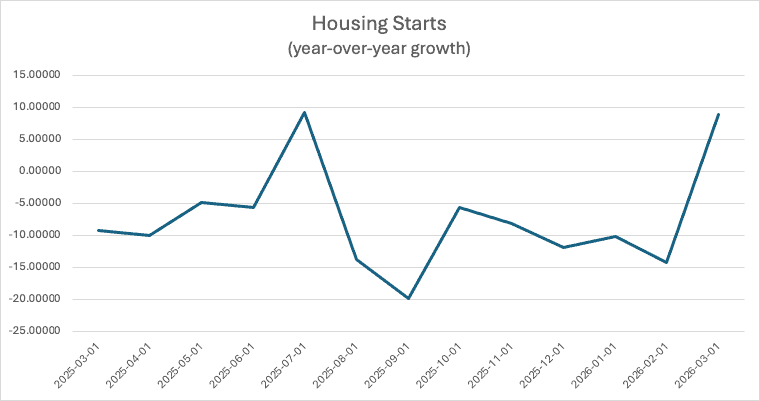
On the other side of the ledger, the past couple of months have seen a jump in housing starts for new, single-family homes. This new construction will add to a recent uptick in the inventory of existing homes on the market. The upshot is that housing supply developments should add to the downward pressure on prices coming from the demand side.
Great news for affordability! Right? No.
This is the problem with framing affordability around the price of anything, including housing. Lower prices because of greater supply is good news. Lower prices because people can’t afford the high prices? Bad news. A different way to think about the issue is that what matters is the price at which you actually make a transaction. If you are not buying because it is unaffordable, there is no real good news until the price falls and you are willing to make the purchase…because it’s affordable.
Fact of the Day
Across all rulemakings last week, federal agencies published roughly $828.6 million in total cost savings and cut 29,593 paperwork burden hours.