The Daily Dish
August 12, 2026
Whither Productivity Growth?
Productivity growth is the single most important determinant of a country’s long-run standard of living. The material well-being of the United States is determined by its (supply-side) capacity to produce goods and services – not fancy Treasury currency interventions, printing money, or other short-term fixes. Over the longer term, real wages are tied to productivity because productivity growth permits companies to pay workers more without having to raise prices.
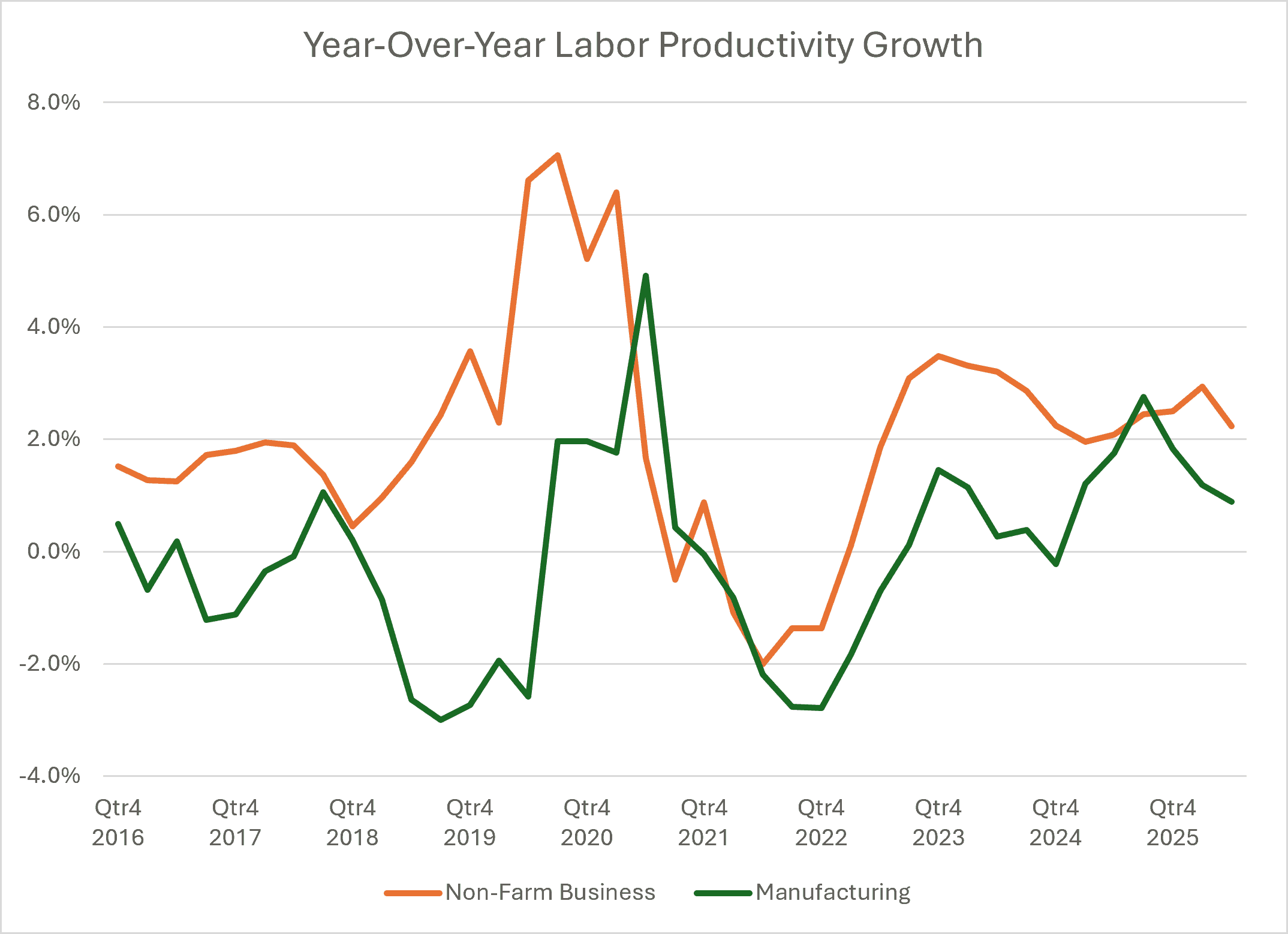
Recently, the Bureau of Labor Statistics (BLS) released updated labor productivity data through the 2nd quarter of 2026. The year-over-year growth rates for non-farm business productivity and manufacturing productivity are graphed below. What do we learn from the graph?
First, the overall level of productivity growth averaged 2.0 percent from 2016 to the present – not bad as a target for the growth of living standards. Manufacturing productivity is a different story. The average value over roughly the past decade is -0.1 percent annually. If the UnitedStates wants good-paying, internationally competitive manufacturing jobs, it will have to do better than that.
Second, the past couple of years are a relatively high productivity growth era, especially in manufacturing. It is good that the productivity performance is improving. But this can be overstated. Certainly, there is nothing about the past six quarters of data that suggests artificial intelligence (AI) has created a sea change in productivity growth. Indeed, growth appears to be tapering off at the moment. Eakinomics is still in a “wait and see” posture on AI.
Finally, in the near term, productivity growth is important for inflation dynamics. This was especially true in 2023, when a huge jump in productivity growth permitted the Fed to reduce inflation rapidly without skirting the edge of a downturn. How much can productivity growth produce room for the Fed to maneuver in the face of high oil prices and, perhaps, increased tariffs?
We won’t know the resolution of most of these issues for years. But we will get a fresh read on inflation at 8:30 when the BLS releases the consumer price index report.
Fact of the Day
Across all rulemakings last week, federal agencies published roughly $5.2 billion in total cost savings but added 161,410 paperwork burden hours.