The Daily Dish
September 23, 2026
Working To Keep From Falling Behind
Quite a lot of electrons have been devoted to the notion of “affordability” in this election year. As regular readers of the Dish (also categorized as long-suffering) know, Eakinomics thinks the most straightforward definition of an affordability problem does not focus on housing, or health, or gasoline, or any single purchase. You have an affordability problem when you don’t have enough money to buy your stuff. Period. The flip side is when you have so much money you don’t care about the prices or other details. (Leading example: the New York Mets.)
One of the things that Eakinomics has been tracking this year is the growth of real average hourly earnings, which have declined in recent months. That is the poster child of a move toward less affordability. Despite this, however, household spending – particularly the real personal consumption expenditures in the quarterly reports on gross domestic product – have continued to grow solidly. How can this be true?
One possibility is that people are cutting back on their saving – and it is true that the personal saving rate has fallen to 3 percent of disposable income, down from 5.1 percent in January 2025. Or they could be spending out of the increased value of stock market holdings or other financial assets.
But there is a third possibility: People are working more. The chart below shows the year-over-year growth of real average hourly earnings in orange. In 2026 it has dipped below zero and remained in negative territory. In contrast, the green line shows the growth of real average weekly earnings. It, too, dipped below zero for a couple of months, but has rebounded more recently.
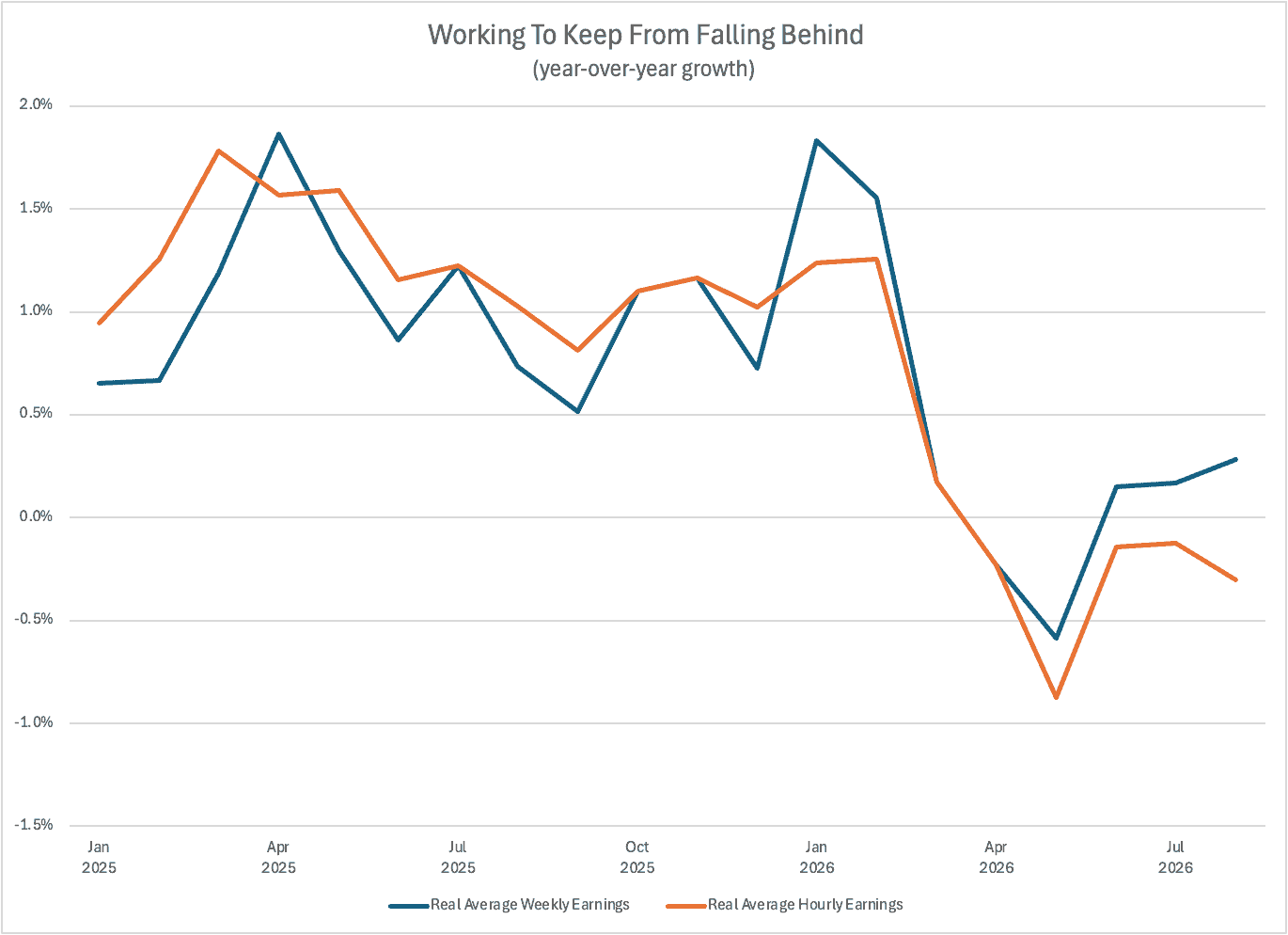
The difference between the two concepts is average weekly hours. People are working more to offset the decline in purchasing power of hourly earnings.
Work is the dividing line between being poor and non-poor in the United States. It is a source self-esteem. And it is one avenue to keep your head above water in an unaffordable climate.
Fact of the Day
Across all rulemakings last week, federal agencies published roughly $95.3 billion in total cost savings and cut 750,578 paperwork burden hours.