The Shipment
May 22, 2025
Eating Tariffs: Bad for Economic Health
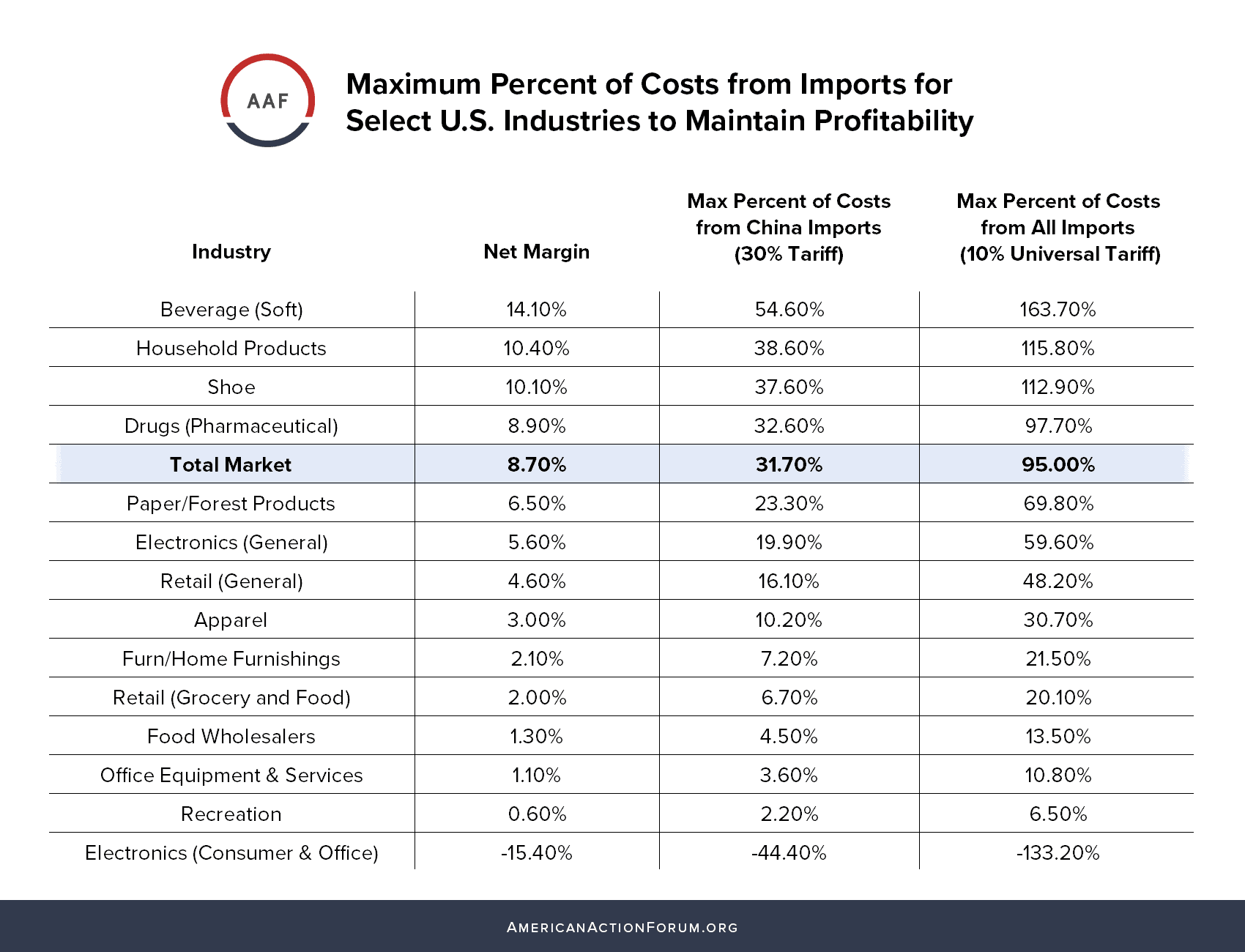
Fun Fact: The Shipment estimates Walmart’s net margin to be close to 2.7 percent as of Q1 2025, which means only 9.2 percent of the company’s costs can come via importing from China in order to maintain profitability given a 30-percent tariff.
Don’t Choke on the Tariffs
What’s Happening: Over the weekend, President Trump targeted Walmart on Truth Social, saying it should “EAT THE TARIFFS” rather than pass higher costs on to consumers due to the fact the company makes billions of dollars annually. This week, Walmart responded by stating that it will “keep prices as low as [it] can for as long as [it] can given the reality of small retail margins.” While Walmart and other retailers have warned about future price hikes, Home Depot has declared that it will not increase its prices as a result of tariffs. Instead, it will stop carrying certain (likely low-margin) products and prioritize other (likely higher-margin) items. Meanwhile, Target took a middle-of-the-road approach by warning on Wednesday that – because of high tariff costs – it may need to raise consumer prices, but only as a last resort.
Why It Matters: The Trump Administration’s go-to-line has been that its tariffs do not impact U.S. business costs or consumer prices, but instead are paid by trade partners with unfair practices, such as China. As AAF President Douglas Holtz-Eakin noted, however, President Trump recently acknowledged the reality that tariffs are, in large part, paid by U.S. consumers and businesses rather than other countries. While this is a step in the right direction for recognizing economic facts, it is still alarming that the president threatened a specific U.S. firm to absorb costs the administration itself unilaterally imposed. It is highly unlikely that retailers such as Walmart even have the ability to “EAT THE TARIFFS” for a sustained period. Given data from New York University’s Stern School of Business, the net profit margin for a generalized retailer is 4.6 percent (see the graphic below for other related industry margins). Using a formula outlined by Douglas Holtz-Eakin, it is possible to estimate the maximum share of a firm’s costs that can come from importing before that firm becomes unprofitable. For example, with a margin of 4.6 percent and a 30-percent tariff on China, a retailer could only have 16.1 percent of its costs come via importing from China before turning unprofitable. The Shipment estimates Walmart’s net margin to be close to 2.7 percent as of Q1 2025, which means only 9.2 percent of the company’s costs can come from importing from China if it wishes to maintain profitability. While it is difficult to determine what percentage of Walmart’s costs are associated with imports from China, it is estimated that nearly 60 percent of Walmart’s imported products are sourced from China. This significant reliance on Chinese products suggests that Walmart will not be able to sustain tariff absorption in the long run. Other industries dealing with office supplies, food, furniture, and apparel have an even lower profitability threshold.
Looking Ahead: The ability for U.S. firms to absorb costs will differ by industry and depend upon the strategies of individual companies. Yet while announcing that prices will not rise might make for good publicity and limit criticism from the administration, it does not look like a sustainable strategy for most low-margin industries. It is these very industries that many U.S. consumers rely upon for everyday commodities – from coffee to vegetables to clothing – that are most likely to see 10-percent or higher tariffs, that have the lowest margins, and that are least likely to absorb added costs. This means that suppliers of everyday commodities will have little choice but to pass the higher costs from Trump’s tariffs on to consumers.