The Shipment
March 13, 2025
Escalating Trade War: Responses and Retaliations
(Not So) Fun Fact: The price of coffee is up more than 100 percent over the past year and has risen nearly 22 percent in 2025 alone. Due to supply-side constraints and demand-side stability, expect the cost of your morning cup of life to continue to rise.
More Tariffs and Less Optimism
What’s Happening: The tit-for-tat trade war continues to escalate as President Trump today threatened 200-percent tariffs on alcohol products from the European Union in response to its proposed retaliatory tariffs (see below). This came as 25-percent tariffs on all U.S. steel and aluminum imports went into effect on March 12, angering U.S. trade partners. Even before these tariffs were levied, President Trump briefly announced he would double them on Canada in response to Ontario’s 25-percent export tariff on electricity going into the United States. Just as quickly as the tariff threat appeared, the situation was resolved, with Commerce Secretary Lutnick and Ontario Premier Ford agreeing to meet today, March 13, to discuss trade. Despite these trade discussions and the delay of across-the-board tariffs on most products from Canada, the new Canadian prime minister, Mark Carney, stated that retaliatory tariffs will remain in place until the United States “commits to free and fair trade.” China, too, officially instituted its second round of 10–15 percent tariffs on Monday, and did so alongside numerous posts on X from its embassy stating that the country is ready for “a tariff war, a trade war, or any other type of war.” The domestic and international fallout from the current trade war has led numerous financial institutions to reexamine the economic outlook for U.S. GDP growth, showing increased odds of a U.S. recession and resulting in a stock market selloff. In response, President Trump said the economy may see a “period of transition” and did not rule out the possibility of a recession.
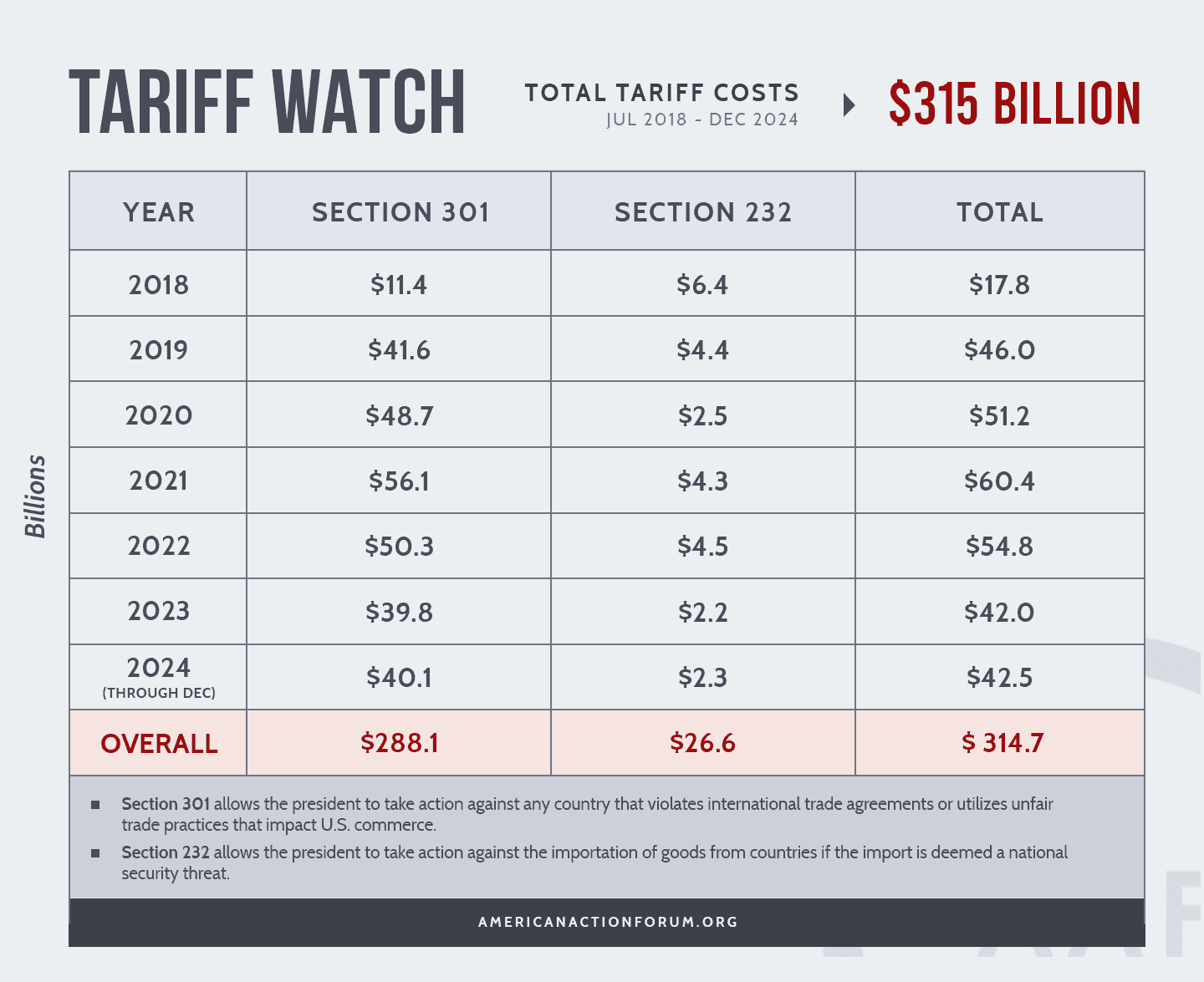
Why It Matters: New U.S. steel and aluminum tariffs, which will raise manufacturing and construction costs, have already been met with retaliation from trade partners who previously negotiated exemptions. The European Union announced it will place tariffs on $28 billion worth of U.S. exports starting in April and Canada has promised tariffs on nearly $21 billion worth of U.S. goods. In response to greater economic uncertainty surrounding trade, JPMorgan Chase places the odds of a potential recession in the second half of the year at roughly 30 percent, and many GDP growth estimates have been lowered by about half a percentage point. As for the stock market, investors have not taken kindly to added uncertainty, with the NASDAQ composite down nearly 9 percent and the S&P 500 down nearly 5 percent since the beginning of 2025. This is the equivalent of trillions of dollars in lost wealth and capital that impacts roughly 62 percent of Americans who have a stake in the market. While the stock market slump may be temporary, U.S. consumers and businesses will begin to feel the weight of 20-percent tariffs on China, which add just over $45 billion in annual costs, according to the Shipment’s calculations.
Looking Ahead: It is anyone’s guess whether U.S. trade partners will be able to re-negotiate the steel and aluminum exemptions they enjoyed just a few days ago but it is likely that further retaliatory measures may be on the way. The window is still open for the Trump Administration to engage in trade negotiations that limit future tariffs, ease the burden of those currently on the table, and prevent a trade war with the rest of the world. If administration officials begin to see blinking red lights in upcoming economic data releases such as employment, inflation, or GDP, it is possible these might act as a catalyst for easing aggressive tariff policies. A metric that may not play a large role in changing administration policy is, the stock market, as Trump this past week, implied that reacting to market fluctuations was too short-sighted. While hope for trade agreements remain, looming in the not-so-distant future are delayed 25-percent tariffs on Canada and Mexico as well as reciprocal tariffs on the rest of the world, which will only exacerbate current economic fears.
Tariffs Implemented
February 4: 10-percent tariff on all imports from China.
March 4: 25-percent tariffs on all imports from Mexico and Canada alongside an additional 10-percent tariff on all imports from China.
March 5: Auto imports from Mexico and Canada are excluded from 25-percent tariffs for one month.
March 6: Imports from Mexico and Canada that fall under the USMCA are exempt from tariffs until April 2.
March 12: 25-percent tariffs on steel and aluminum.
Upcoming Tariffs:
April 1: Target date for USTR trade policy review and recommendations.
April 2: Reciprocal tariffs on many or all countries may take effect and delayed tariffs on Canada and Mexico may resume.
April 2–4: Auto imports from Mexico and Canada may be subject to 25-percent tariffs.
Unspecified Date: Various tariffs on pharmaceuticals, semiconductors, automobiles, copper, and the EU and BRICS countries.