The Daily Dish
November 21, 2025
WOTUS is Back
Over the years AAF has spilled a lot of electrons over the Waters of the United States (WOTUS) rule, and rightly so. This makes sense since WOTUS is the key rule implementing the Clean Water Act and, accordingly, is a land-use regulation for the entire country. Also, WOTUS has a fairly convoluted history, especially regarding wetlands. Lakes and rivers are easy, but when is a wetland consider “water”?
A 2006 Rapanos decision by the Supreme Court produced two different standards for deciding what constituted WOTUS. A plurality of four judges, led by the late Justice Scalia, concluded that navigable waters and wetlands with a “continuous surface connection” should be subject to regulation. Justice Kennedy, however, wrote a separate concurring opinion indicating that wetlands should be regulated if they have a “significant nexus” to navigable waters, and would affect them, even if they aren’t directly connected.
That confusion reigned until the 2023 Sackett decision, that found wetlands are regulated only when they are physically inseparable from a lake, river, or stream, but left it to the Environmental Protection Agency (EPA) to issue a rule implementing that standard. The EPA issued the preliminary rule this past Monday and it has two interesting features.
First, instead of a single, clean definition, it has a two-part test. Wetlands would be regulated if they contain surface water during the “wet season,” and they must touch a waterbody that flows during that season. This does, however, allow for the possibility that a wetland can be regulated even though it has no connection to a navigable water. In short, Eakinomics suspects that the fight over WOTUS is far from over.
The other interesting feature is that this would seemingly be an easy place to pad the administration’s total deregulatory achievements. After all, stopping the heavy and expensive regulation of wetlands could add tens if not hundreds of billions of dollars to the reductions in total regulatory burdens. The administration’s Regulatory Impact Analysis says that “the proposed rule is clearly deregulatory in nature,” but does not actually calculate the savings. Instead, it offers up a flowchart, which perhaps is helpful if you are keeping score at home.
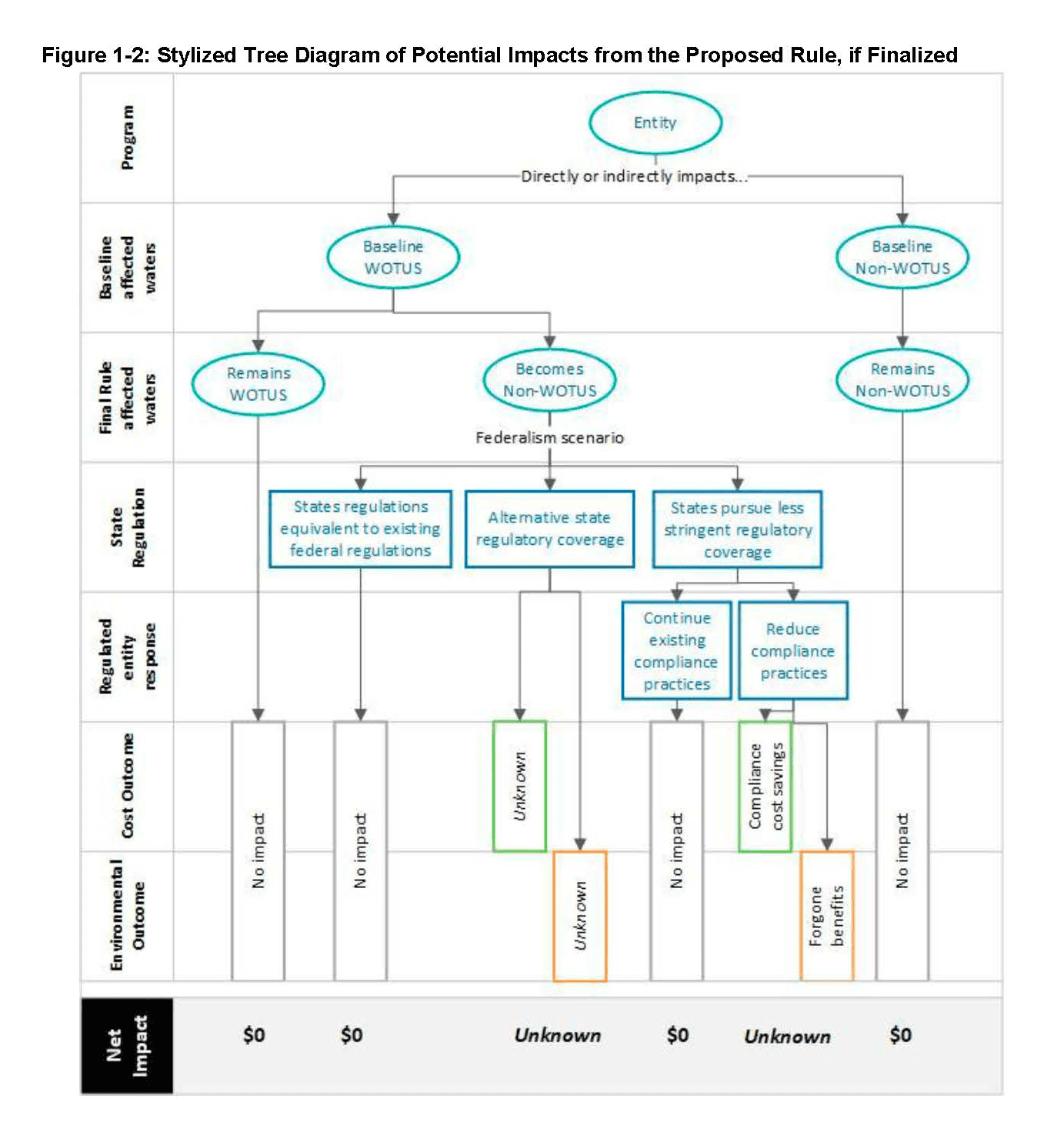
Have fun!
Fact of the Day
Since January 1, the federal government has published $702 billion in total net regulatory cost savings and 72.1 million hours of net annual paperwork cuts.