The Daily Dish
May 16, 2025
About Those Medicaid Reforms
An enormous amount of ink has been spilled over the reconciliation process underway in the House of Representatives – much of it focused on reductions in spending, either adopted or rejected. Central to this discussion have been the proposals to reduce spending on Medicaid.
Now, there are many angles from which to analyze the impact of the reforms: insurance coverage, insurance generosity, federal spending, and others. Yet the original intent of having reconciliation procedures was to enable the politically difficult task of raising federal taxes and/or reducing federal spending, so let’s spend a moment looking at the budget impacts.
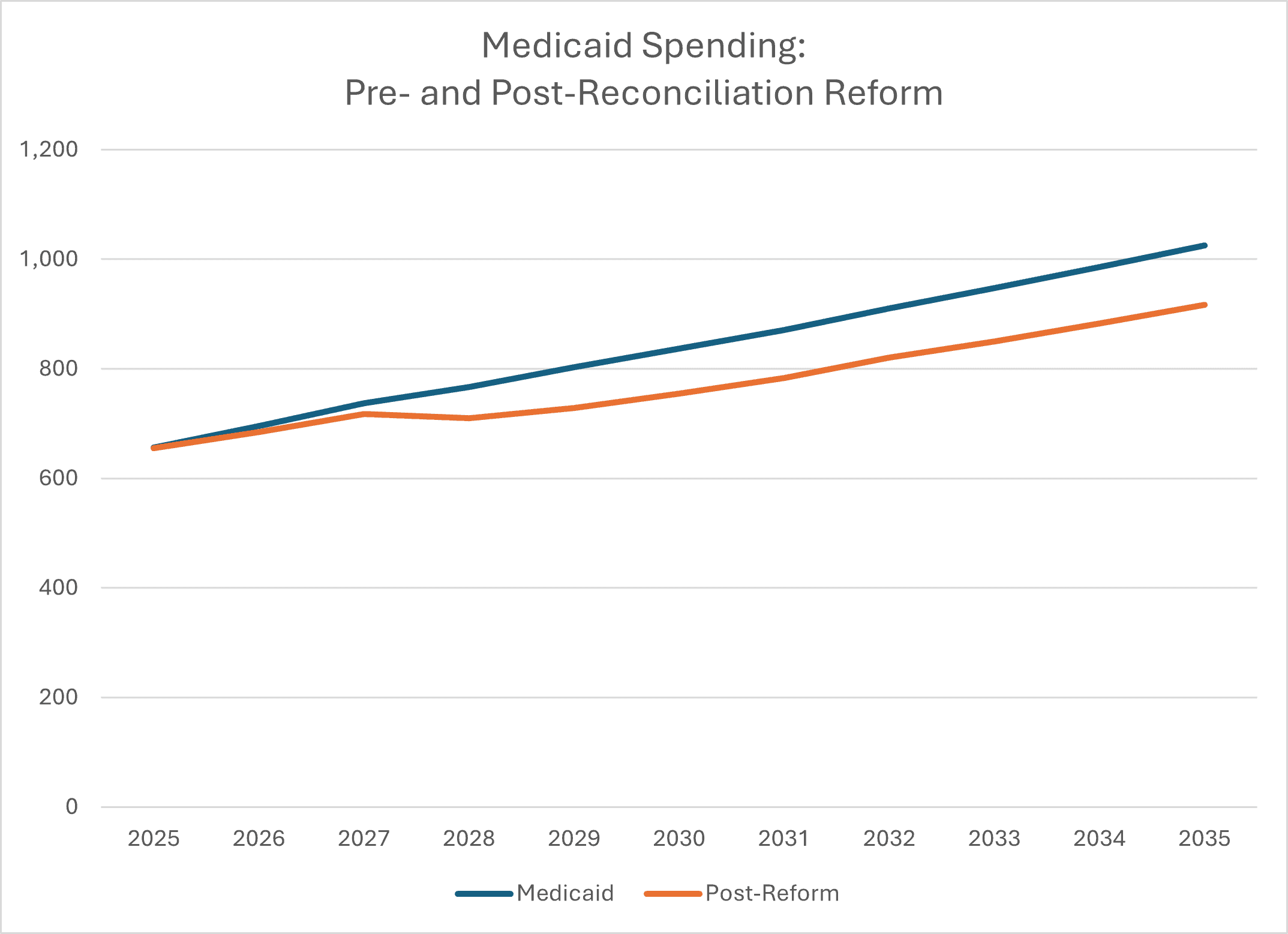
The graph below shows the impact of the reforms as voted out of the Energy and Commerce (E&C) Committee. The total reduction over the 2026 – 2035 window amounts to 8.5 percent of spending in that projection period. Big is in the eye of the beholder, but another way to think about it is that the reforms slow by three years the time it takes to cross the $800-billion threshold.
How much does this help address the overall budget challenge? The next graph sheds a little light on this issue by showing the path of Social Security, Medicare, and Medicaid spending both before and after the Medicaid reforms. The short answer: hardly at all. (Numerically the answer is 1.6 percent.)
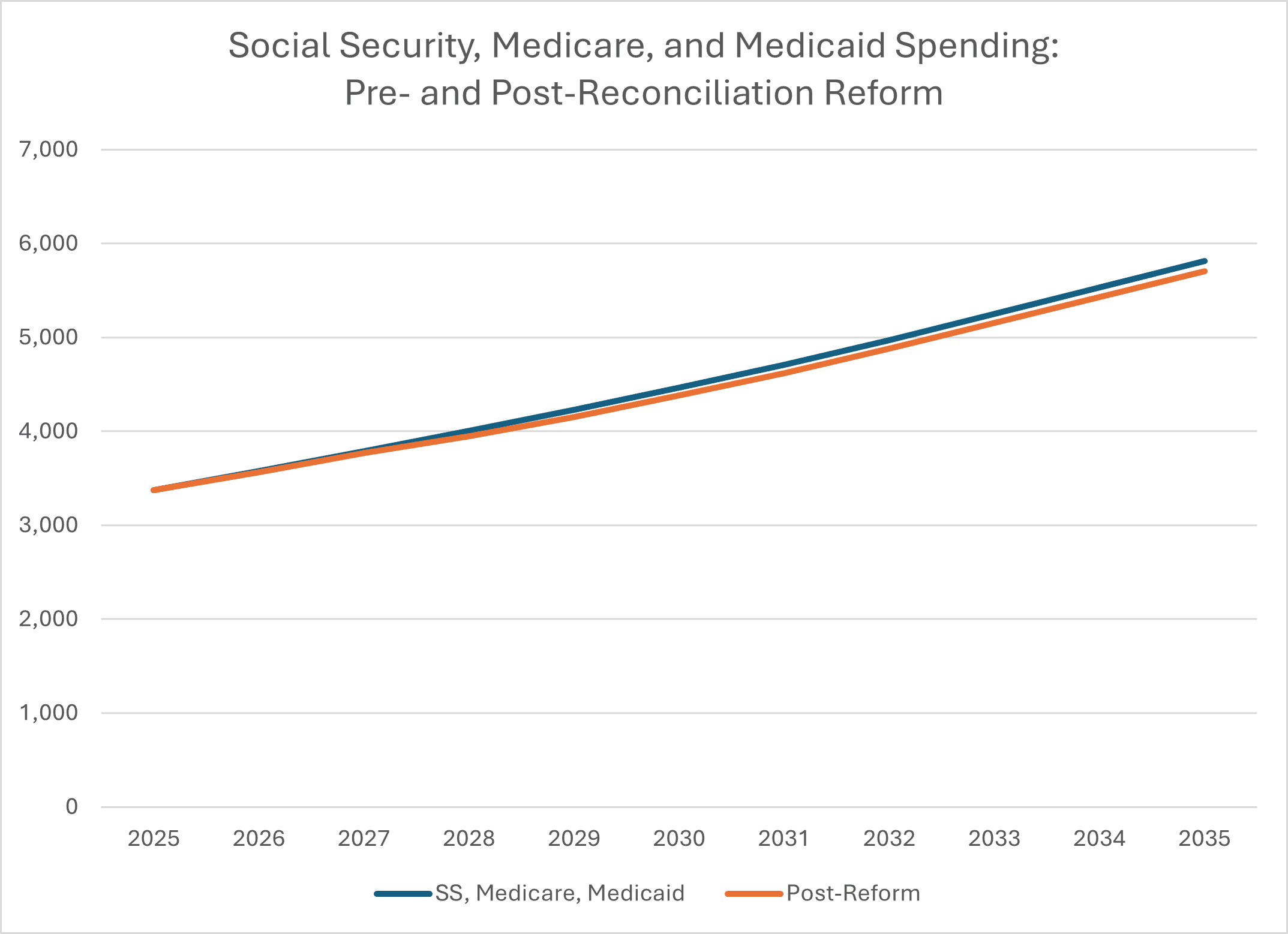
This is the complaint voiced by some fiscal conservatives, who see the efforts at spending control in the overall bill as too small. The problem, of course, is that the president took off the table touching Social Security and Medicare. He also showed little appetite for Medicaid reforms. Note how little of the Medicaid spending is impacted prior to the end of his term.
The reality is that the fiscal situation will worsen in 2025, with no reason to believe there will be serious efforts until after the next presidential election.
Fact of the Day
Since January 1, the federal government has published $105.5 billion in total net regulatory costs and 69.5 million hours of net annual paperwork cuts.