The Daily Dish
July 30, 2026
How ‘Bout Them Price Controls?
Apologies, loyal readers of Eakinomics. Someone must have scheduled IRA Rage Week without informing me. Here we go again.
As has been noted myriad times, the key feature of the Inflation Reduction Act’s (IRA) drug provisions was the imposition of price fixing on Medicare Part D drugs and, subsequently, Part B drugs. Price fixing is evil, whether it is rent controls, credit/debit card swipe fees, interest rates, or any other market. Price controls do not produce additional supply or diminish demand, so they do not change the economics that produce high prices. Not only are they evil, they fail in their fundamental goal – this is no different in prescription drugs. And in the case of biopharma, price controls diminish innovation incentives.
The IRA contained all these evils and many more. But the central promise of its supporters was that it would save money. In particular, the Part D program would be cheaper and deficits would be smaller. Yet a comparison of the most recent Congressional Budget Office (CBO) baseline projections for Part D in January 2026 (“new”) and June 2024 (“old”) yields the following:
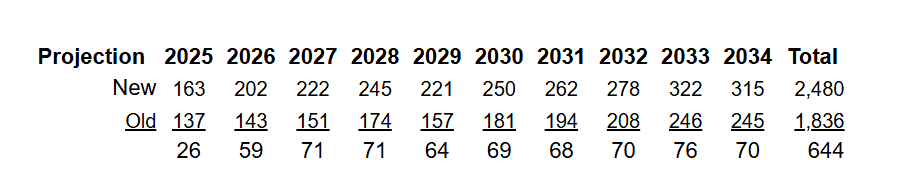
For those of you keeping score at home, somehow the Part D program got more than $600 billion pricier over the 2025–2034 window. What is going on?
A recent letter from CBO Director Philip Swagel to House committee Chairs Arrington, Smith, and Guthrie shed light on the situation. The opening says it all (emphasis added):
The 2022 reconciliation act contains three major provisions affecting prescription drug prices and coverage: drug price negotiation, which requires the Department of Health and Human Services (HHS) to negotiate prices directly with manufacturers for selected high-expenditure drugs; inflation rebates, which manufacturers must pay if increases in their drug prices outpace inflation; and a redesign of Part D to cap enrollees’ annual out-of-pocket costs, limit premium increases, and shift more financial liability to plans and manufacturers.
In September 2022, following the enactment in August, CBO projected that enacting those provisions would lead to combined deficit reductions of $129 billion over the 2022–2031 period. At the time, CBO estimated that by 2026, the reductions in direct spending stemming from the first two provisions would more than offset increases associated with enacting the third.
Since then, on the basis of new information, CBO has revised its projections. Evidence now indicates that the spending reductions attributable to drug price negotiation and inflation rebates have been smaller than CBO originally estimated. The costs of the Part D redesign have been significantly larger because of greater-than-anticipated increases in spending because of greater use of prescription drugs.
As a result, the agency now projects that those provisions will combine to increase deficits over the 2022–2031 period.
So, not so hot after all. Bad incentives and bad budgetary outcomes from a bad law. Enjoy IRA Rage Week.
Fact of the Day
As crypto currency is used more widely, sanctioned entities and other illicit actors received an estimated $141 billion of stablecoin in 2025.