Insight
June 11, 2026
Debt and Deficit (Lack of) Progress Report: May 2026
Executive Summary
- The U.S. Department of the Treasury’s May 2026 Monthly Treasury Statement shows the budget deficit totaled $1.2 trillion during the first eight months of fiscal year (FY) 2026 – $118 billion lower than in FY 2025; the FY 2026 cumulative deficit was the net effect of $3.7 trillion of revenue collections and $4.9 trillion of spending.
- On a monthly basis, the budget deficit totaled $293 billion in May 2026 – $23 billion lower than in May 2025; the May 2026 deficit was the net effect of $336 billion of revenue collections and $628 billion of spending.
- Revenue is up by $174 billion in FY 2026, driven largely by higher individual income and payroll tax collections and larger customs duties.
- Spending is up by $56 billion in FY 2026, driven largely by higher entitlement spending and larger interest payments on the national debt.
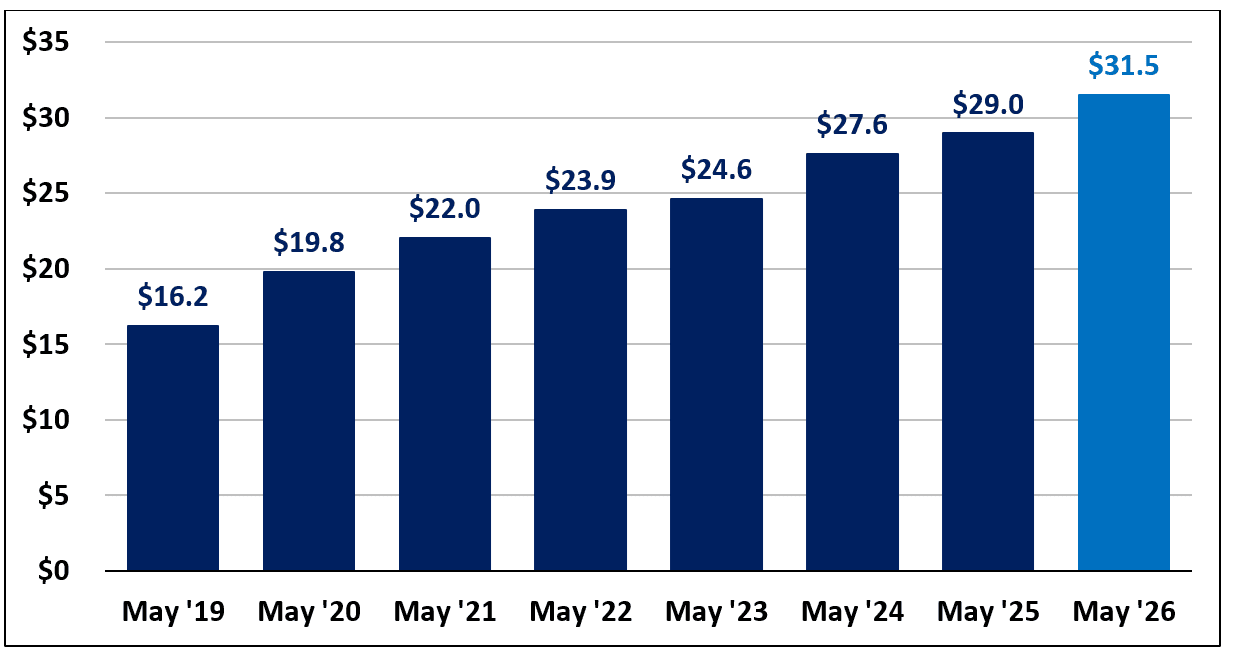
- The national debt totaled $31.5 trillion at the end of May 2026 – $2.6 trillion higher than the debt at the end of May 2025.
Introduction
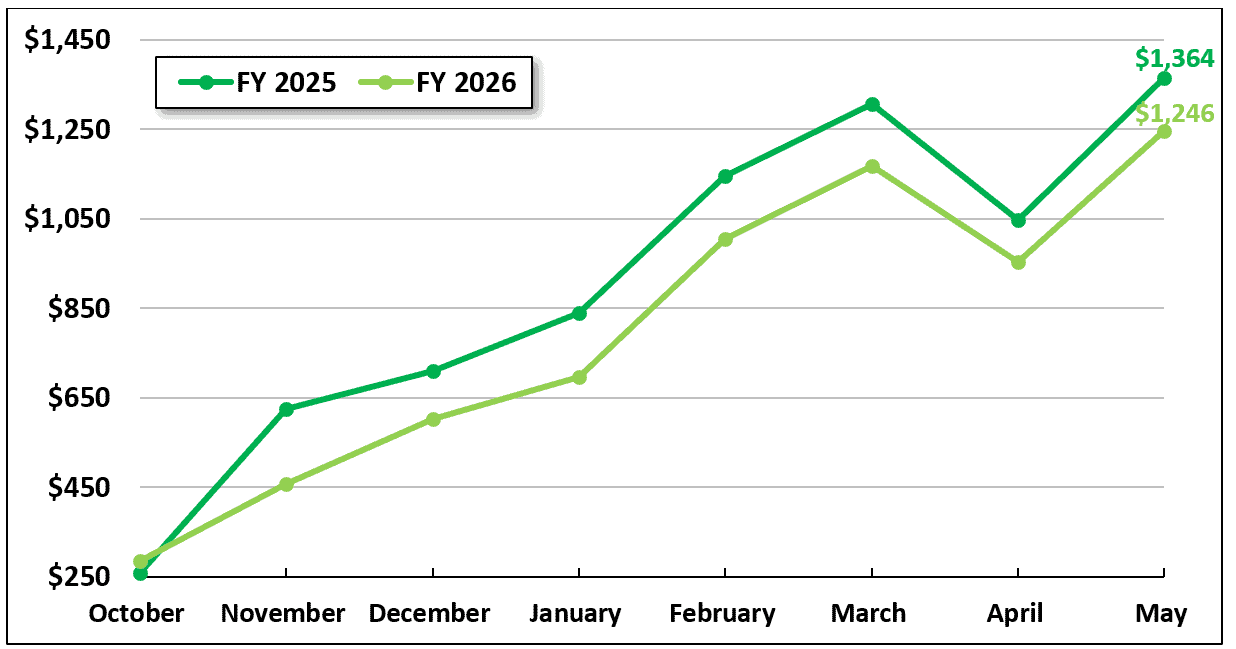
The U.S. Department of the Treasury’s May 2026 Monthly Treasury Statement shows the budget deficit totaled $1.2 trillion during the first eight months (October–May) of fiscal year (FY) 2026. The $1.2 trillion was the net effect of $3.7 trillion of revenue collections and $4.9 trillion of spending. The cumulative FY 2026 deficit was $118 billion (9 percent) below the cumulative FY 2025 deficit of $1.4 trillion. The change was the net effect of $174 billion of higher revenue collections and a $56 billion increase in spending.
Cumulative Federal Budget Deficit During the First Eight Months of FY 2026 and FY 2025 (billions of dollars)
Source: U.S. Department of the Treasury.
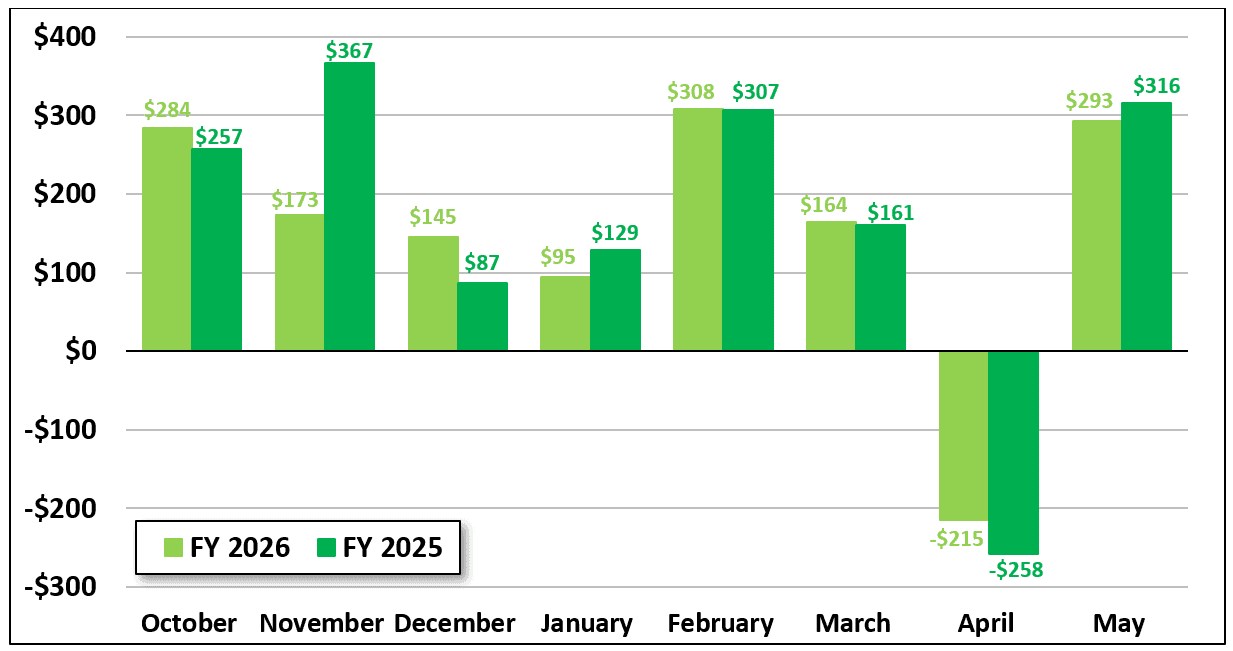
On a monthly basis, the budget deficit totaled $293 billion in May, which was the net effect of $336 billion of revenue collections and $628 billion of spending. The May 2026 deficit was $23 billion (7 percent) below the $316 billion deficit recorded in May 2025. This was the net effect of $36 billion of lower monthly revenue collections and a $59 billion decrease in spending.
Monthly Budget Deficit During the First Eight Months of FY 2026 and FY 2025 (billions of dollars)
Source: U.S. Department of the Treasury.
Revenue Is Up in FY 2026
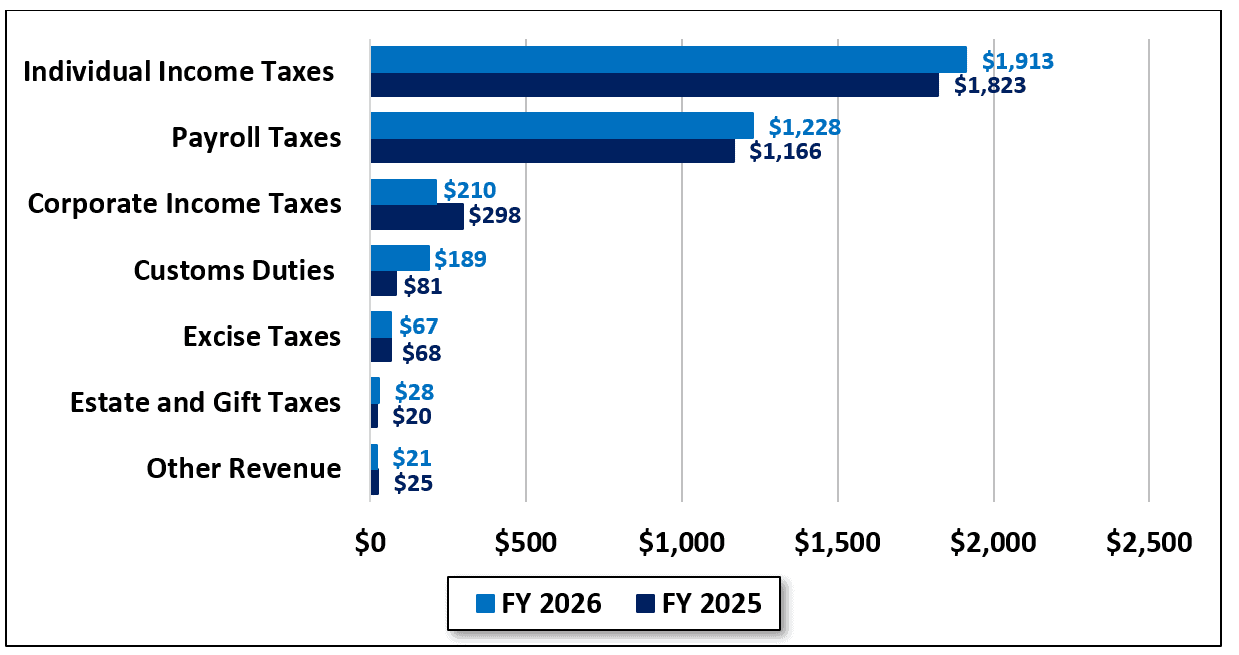
Federal revenue collections rose by $174 billion (5 percent) during the first eight months of FY 2026 compared to last year. Individual income tax receipts increased by $89 billion (5 percent) and payroll tax collections rose by $62 billion (5 percent) due to rising wages and salaries. Corporate income tax receipts declined by $88 billion (30 percent) due to the One Big Beautiful Bill’s business tax changes, including larger tax deductions for certain business investments. Customs duties rose by $107 billion (132 percent) due to tariff changes made through executive action. Notably, customs duties declined drastically in May as the federal government began issuing the $166 billion of eligible tariff refunds to businesses that paid tariffs imposed under the International Emergency Economic Powers Act, which the Supreme Court ruled was illegal. Estate and gift taxes increased by $8 billion (41 percent), excise tax collections fell by less than $1 billion (1 percent), and other sources of revenue declined by $4 billion (15 percent).
Federal Revenue Collections During the First Eight Months of FY 2026 and FY 2025 (billions of dollars)
Source: U.S. Department of the Treasury.
Spending Is Up in FY 2026
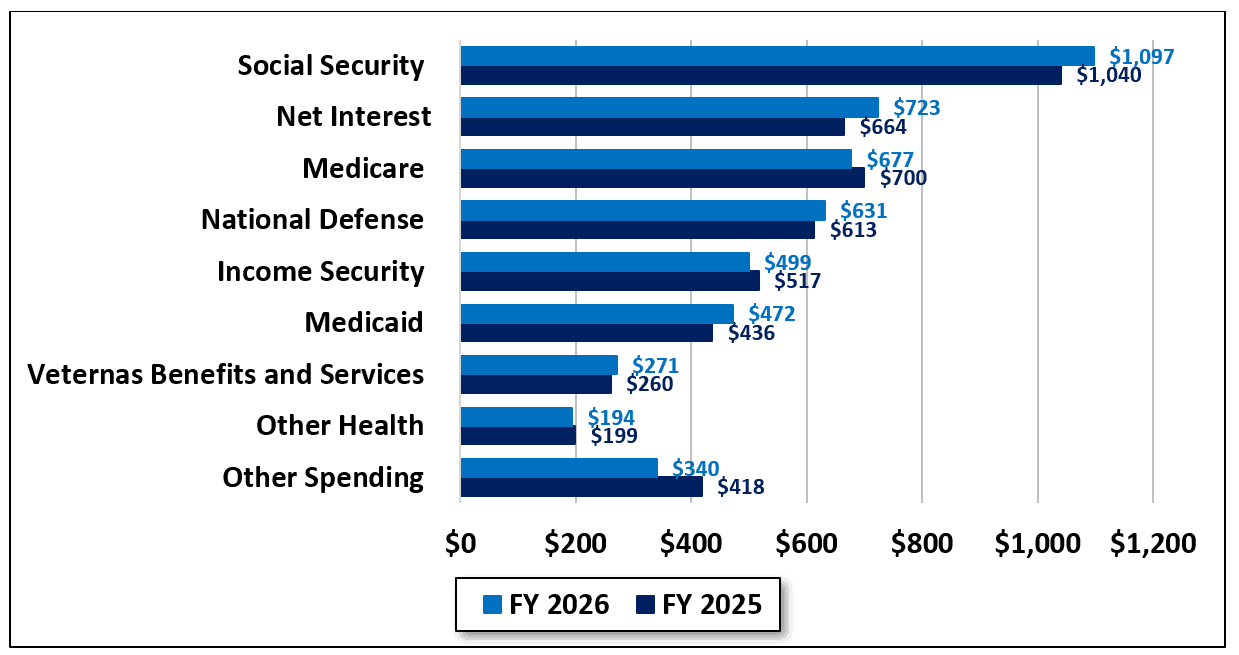
Federal spending rose by $56 billion (1 percent) during the first eight months of FY 2026 compared to the corresponding period last year. Social Security spending increased by $57 billion (6 percent) due to increases in average monthly benefits and the number of beneficiaries enrolled in the program. Medicare spending fell by $23 billion (3 percent) while Medicaid spending rose by $35 billion (8 percent) because of higher per-enrollee costs. Other health spending, including on the Children’s Health Insurance Program and Affordable Care Act premium tax credits, declined by $5 billion (3 percent).
National defense spending increased by $18 billion (3 percent) due to higher spending on military personnel and research and development. Spending on veterans benefits and services rose by $11 billion (4 percent) because more people received benefits and spending per beneficiary rose. Spending on income security programs, including the Supplemental Nutrition Assistance Program, Supplemental Security Income, and Temporary Assistance for Needy Families, fell by $18 billion (3 percent) in part because of the One Big Beautiful Bill’s reforms to certain income security programs.
Interest payments on the national debt increased by $58 billion (9 percent) because the debt was larger and long-term interest rates were higher. Net interest remains the second-largest government expenditure behind Social Security.
Federal Spending During the First Eight Months of FY 2026 and FY 2025 (billions of dollars)
Source: U.S. Department of the Treasury.
The National Debt Is Unsustainable
At the end of May 2026, federal debt held by the public totaled $31.5 trillion. This was $2.6 trillion higher than the $29.0 trillion debt at the end of May 2025.
Since May of 2019 – before the fiscal impact of the COVID-19 pandemic really materialized – the national debt has nearly doubled and is projected to continue to rise over both the short- and long-term.
Debt Held by the Public in May (trillions of dollars)
Source: U.S. Department of the Treasury.