The Shipment
June 12, 2025
Back to Square One: A China Trade Framework
(Not so) Fun Fact: The price of your morning cup of caffeine continues to climb. The global price of coffee beans is up about 11 percent as of April, raising the average price of ground roast coffee by 13 percent in U.S. cities from January to May (≈$7.9 a pound). On the bright side, be thankful it’s not $12 a cup, which may soon be the median price in Australia.
Hooray! An Agreement on a Framework for a Potential Deal with China
What’s Happening: Trade talks in London between China and the United States concluded Tuesday, with both sides agreeing on a framework that will help implement the “trade deal” agreed to in Geneva (a tentative tariff pause with no formal trade agreement signed). The previous trade talks in Geneva resulted in lower U.S. tariffs on China and the country’s retaliatory tariffs on the United States, as well as reversed its export controls on rare earths. President Trump announced on Wednesday that the London talks have resulted in a 55-percent tariff on China, a 10-percent retaliatory tariff, a lift on rare earth export controls from China, and an agreement to continue allowing Chinese student visas. The 55-percent China tariff includes the 10-percent “Liberation Day” baseline, 20-percent fentanyl tariff, and 25-percent Section 301 tariffs from Trump’s first term. According to the Trump trade team, this agreement on a framework may lead to a future trade deal – but of course, such a trade deal would still be subject to approval from President Trump and President Xi.
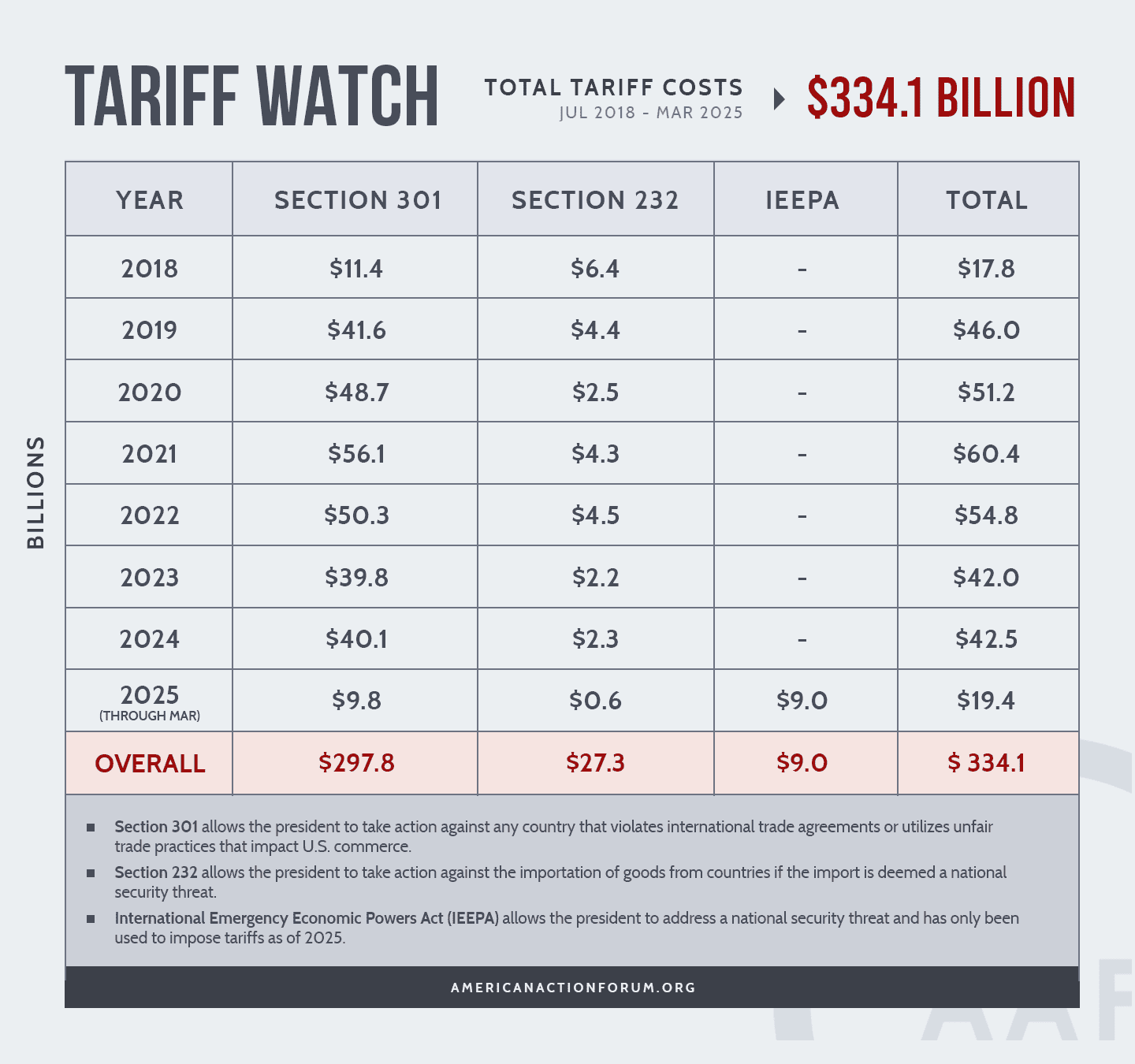
Why It Matters: Simply put, the London trade talks have resulted in zero progress and maintain the status quo set by the Geneva meeting. Using 2024 as a baseline, tariff rates are still significantly higher and rare earth export licenses from China have a six-month limit compared to no such restrictions before the trade war escalation. While the trade team touts this as some sort of win for the administration, the evidence on the ground suggests otherwise. Between January and April of this year, tariffs on China have cost nearly $26 billion, representing a 78-percent increase from the same period last year. Imports from China declined after the imposition of new tariffs but actually increased slightly overall during this period, up half a percent. Meanwhile, U.S. exports to China fell nearly 20 percent between January and April. This means U.S. businesses have been paying more for Chinese goods and exporting less to China. If they were hoping for that pain to pay off with a better trade environment, they are surely disappointed. A further sting is that the trade deficit with China, a point of contention for President Trump, grew by more than 11 percent. On the bright side, U.S. automakers and other firms will feel some relief knowing they should be able to import vital minerals and magnets from China once again. This eases concerns over shortages and large price hikes that only materialized as a result of the trade war.
Looking Ahead: As of now, there have been no announcements about when or where the next round of trade talks will be. Most likely, there will be a bit of a wait-and-see period during which both sides ensure that the expectations of their informal deal are met. In the meantime, U.S. businesses will continue to pay much higher import taxes that are almost certainly being passed along, in part, to U.S. consumers. The current deadline for the China tariff pause is August 12, giving the administration roughly two months to reach a deal, or raise tariffs back to 145 percent, an unlikely scenario given that even the president seems skittish about returning to this level. The other option, which seems to be the preferred choice of the administration, is that the trade teams will agree to another meeting that results in a temporary deal to further discussions down the road – or, in other words, procrastinating on any real negotiated trade agreement.

Graphic Description: From January to April, U.S. trade deficits grew substantially overall and particularly with China despite a large increase in tariff collections.