The Shipment
May 15, 2025
Negotiations Afloat, but No Smooth Sailing to Trade Deal
The Appeal of a China Trade Deal
What’s Happening: The United States and China agreed to a 90-day tariff pause on Sunday at a meeting in Geneva, Switzerland. This news was officially confirmed early Monday by both the White House and Chinese negotiators in a joint statement. The pause, which follows the precedent set by the 90-day “Liberation Day” tariff pause, lowers tariffs on China from 145 percent to 30 percent and China’s retaliatory tariffs from 125 percent to 10 percent. The joint statement also mentions that China will remove non-tariff countermeasures taken since April 2, 2025, and that both parties will be committed to future discussions. This agreement is the first real step toward de-escalating trade tensions between the world’s largest economies and has since been celebrated by markets as a step in the right direction toward a sturdier trade deal in the future. President Trump had appointed Treasury Secretary Bessent to lead negotiations, while China has selected Vice Premier He Lifeng, a trusted appointee of President Xi’s vision for China, to maintain a dialogue.
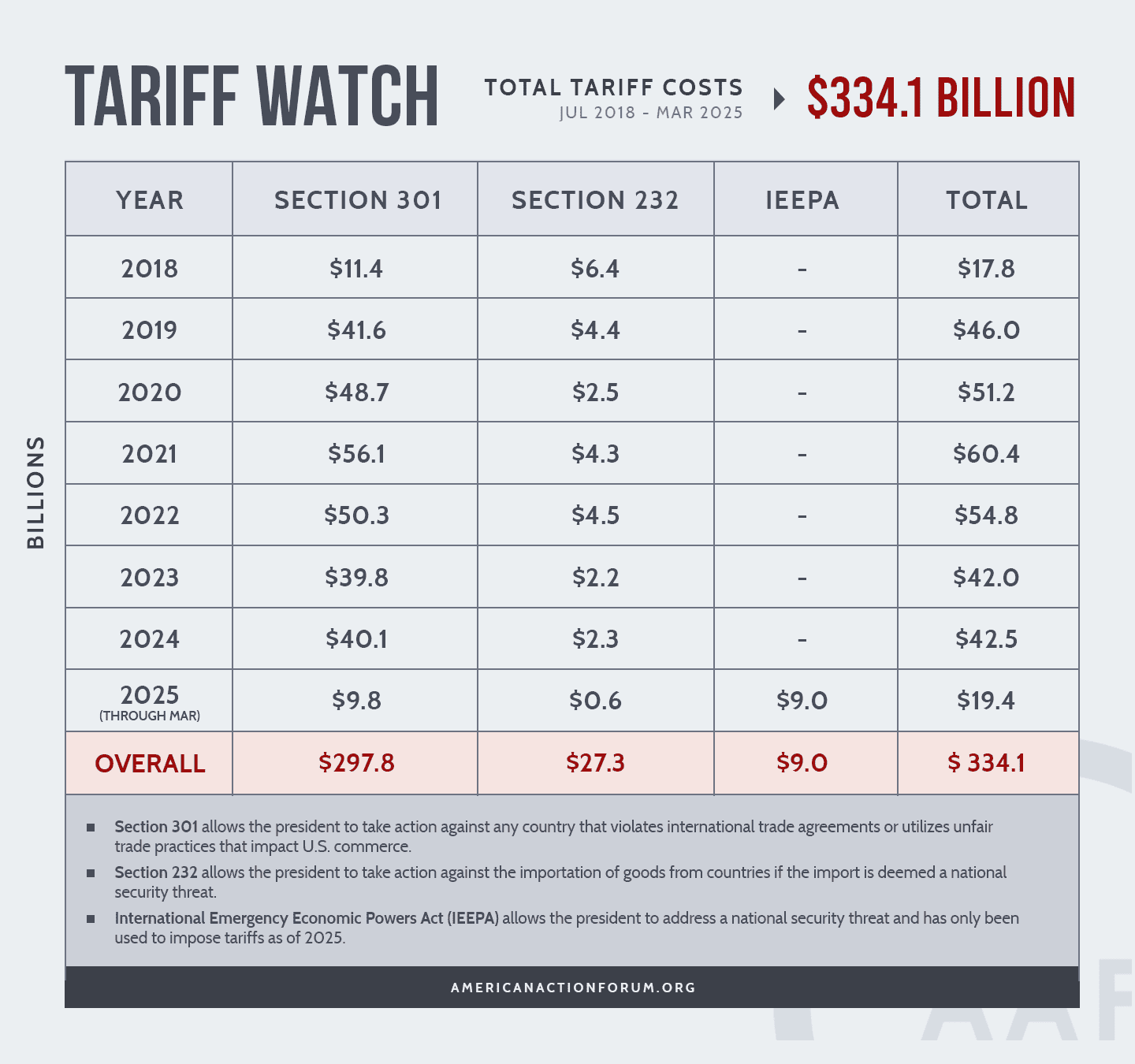
Why It Matters: The dramatic market rally following the tariff-pause announcement was hardly a surprise. As Secretary Bessent said himself, there was effectively a U.S. embargo on Chinese imports due to the scale of tariffs in place, meaning any move to lower these barriers, provide clarity for the trading environment, or formalize a new trade deal would be met with great enthusiasm from the business community. It is important to note, however, that this announcement is not a formal trade deal, and the reversal of bad trade policy does not make the current policy much better. The now 30-percent tariff on China still raises costs by approximately $60 billion annually, according to the Shipment’s calculations, a number that does not factor in the various sector-wide tariffs already in place or that may soon be implemented. Additionally, de minimis shipments (packages valued under $800) from China will still be subject to a 54-percent tariff and flat $100 fee, down from 120 percent but a sharp increase from 0 percent. Given the fact most of these shipments come from China and are mainly purchased by lower-income U.S. households, the elimination of de minimis will continue to cause economic pain, likely increasing costs by close to $8 billion on its own. The best outcome from this tariff pause is China reversing its export controls on certain critical minerals – something it formally announced on Wednesday afternoon. China dominates the processing of many rare earths and holds some of the world’s largest reserves, a supply the United States cannot easily replace. Alongside these mineral controls, other controls on dual-use technologies and investment restrictions on 28 U.S. entities are now in the process of being lifted.
Looking Ahead: President Trump stated at a press conference on Monday that he may speak with President Xi by the end of the week, but as of today no such meeting has occurred. If a meeting comes to fruition, the United States may be closer to formalizing a trade deal with China that results in a more permanent end to most China tariffs. The questions that remain are what sort of trade agreement will be reached and whether China will continue to be treated differently than other trade partners. A formal agreement, in which negotiators on both sides reached a detailed deal, would be best. More likely, however, is a less-formal arrangement under which tariffs come down in exchange for China once again agreeing to purchase more U.S. products. In the last trade deal signed under Trump’s first term, China failed to make the agreed purchases. The best-case scenario in terms of future tariffs may be the elimination of the 20-percent fentanyl-related tariffs, bringing China down to the universal 10-percent rate. A White House statement notes that the Geneva negotiations did touch on both countries collaborating on the fentanyl crisis, providing a sliver of hope that tariffs will continue to come down.
The No-good, Very-bad Shipbuilding Investigation
What’s Happening: There is an ongoing Section 301 investigation by the United States Trade Representative (USTR) intended to protect the U.S. shipbuilding and maritime industry from Chinese competition. Labeled the “Investigation of China’s Targeting of the Maritime, Logistics, and Shipbuilding Sectors for Dominance,” this wide-sweeping, protectionist move to charge foreign ships entering U.S. ports began under the Biden Administration and, unfortunately for those who seek lower prices, receives somewhat bipartisan support, as evidenced by a recent bill proposed in Congress. On April 17, USTR proposed actions that could be taken to address Chinese shipbuilding dominance, including a series of fees and tariffs. May 19 is the deadline for interested parties to submit comments.
Why It Matters: The proposed actions by USTR would result in increased operating costs for U.S. businesses, importers, and exporters, as well as create an entry barrier for any company wishing to enter the U.S. market. These actions are split into two separate phases, one beginning 180 days after implementation and the other in 2028. The first phase would involve charging any China-based vessel operator $50 per net ton of cargo which, depending on the size of the cargo ship, could add millions of dollars in fees. This per-ton fee would increase by $30 per year for three years. Additionally, any Chinese-built vessels would be charged $18 per ton or $120 per container that is unloaded at a U.S. port, whichever value is higher. Finally, the United States would introduce a $150 fee for every car equivalent unit capacity on any foreign-built car carrier vessel. This fee could be waived and refunded if the operator orders and plans to utilize a U.S.-built car carrier in the future. Similar exemptions are outlined that make these actions more manageable for ship operators and U.S. businesses. This includes separate fees not stacking, fees only applying to the same ship a maximum of five times in a year, fees not applying to empty ships, and fees not applying to any Chinese vessels operating within the Great Lakes, Caribbean, or to and from U.S. territories. The second phase would include restrictions on transporting liquified natural gas on foreign vessels, which would have major consequences on the competitiveness of the U.S. energy sector. Additional tariffs would also be placed on cranes, crane parts, and containers from China ranging from 20 to 80 percent.
Looking Ahead: As of now, the USTR investigation only recommends actions that could be altered or ignored by the administration after final comments are examined. While these specific actions to “protect” the shipping and shipbuilding industries may not come to fruition, there is bipartisan support in Congress to do so. Protective fees and tariffs may not be introduced by the White House, but similar measures may come from the legislative branch between now and the midterm elections.