The Shipment
April 23, 2026
It’s Raining Refunds
(Not So) Fun Fact: As of April 9 – according to the most recent court filing from CBP – only 17 percent of importers had completed the process for IEEPA refund eligibility.
It’s Raining Tariff Refunds
What’s Happening: On Monday, United States Customs and Border Protection (CBP) officially launched an automated portal for U.S. importers to request refunds for tariffs imposed by President Trump under the International Emergency Economic Powers Act (IEEPA) and later struck down by the Supreme Court. The refund system – known as the Consolidated Administration and Processing of Entries (CAPE) portal – must be accessed via the Automated Commercial Environment (ACE) Secure Data Portal. CAPE declarations (tariff refund requests) can include up to 9,999 individual import entries and are limited to the importer of record or a licensed customs broker acting on behalf of an importer. This means that not all U.S. businesses or consumers are eligible to submit an IEEPA refund request and will have to rely on what the Shipment calls “secondary refunds” (more on this later). Currently, CBP and CAPE are in the first phase of issuing IEEPA refunds, which covers entries finalized/liquidated within the past 80 days as well as unliquidated entries. Unliquidated entries are imports that do not have final fees or tariff calculations owed by importers, making them far easier for adjustments based on IEEPA refunds.
Why It Matters: The IEEPA refunds are set to be the largest trade-related refund in history as they include about 53 million import entries from 330,000 importers, worth close to $166 billion. According to an April 14 court filing, approximately 82 percent of entries can receive electronic refunds, representing roughly $127 billion or about 76 percent of all IEEPA tariffs paid by importers. Although a large portion of these refunds are now eligible or are in the early stages of the CAPE process, only 17 percent of importers (56,497) have completed the process to receive these refunds. This may indicate that the refund process is arduous and not well known to most importers, particularly small businesses with only a handful of entries. On the other hand, it shows that the total amount of refunds is concentrated in a small percentage of importers, which would make sense given the fact that a few large businesses make up a large share of U.S. imports and therefore IEEPA tariffs paid. Figure 1 displays the estimated percentage of importers, import entries, and tariffs that are currently eligible for the CAPE process and subsequent refunds.
While the complexities of the refund process itself will spark questions and take time, another concern is whether everyday shoppers will receive refunds for the tariff costs passed along to them. As AAF President Douglas Holtz-Eakin has covered, refunds act as a reverse tariff or negative tax. Just as tariffs (taxes) raised costs for businesses and prices for consumers, refunds (subsidies) will do the reverse by allowing businesses to pass along savings to consumers through price cuts or by reining in future price hikes. As noted earlier, this is one example of the “secondary refunds” that will eventually take place once importers begin to receive the electronic refund payments. Another example of “secondary refunds” is the approach taken by shipping companies such as UPS and FedEx, both of which are major U.S. importers of record eligible for the CAPE process. These companies have issued guidance to customers stating they will create refund processes of their own. When all is said and done, the labor hours and resources that go into the entire tariff refund process will be massive, wasteful, and were entirely preventable opportunity costs for the United States.
Looking Ahead: Once importers submit their CAPE declarations, it will take 2–4 weeks for entries to be validated and then another 60–90 days to process the accepted requests. This means that the first refunds via the CAPE process could begin to hit importers’ bank accounts beginning around the Fourth of July but will likely be closer to mid-July or August. Phase One of CAPE will likely continue beyond August as it will inevitably take time for all eligible importers to complete the process and overcome any hurdles along the way. Once these initial government refunds enter circulation, importers such as UPS and FedEx will begin issuing their refunds which pushes the “secondary refund” time horizon into the second half of 2026, likely the fall. It is unclear when Phase Two of CAPE will begin, but it will eventually cover many remaining liquidated entries that may be more difficult to refund.
Figure 1: Estimated Percentage of Importers, Import Entries, and Tariffs Eligible for Refunds
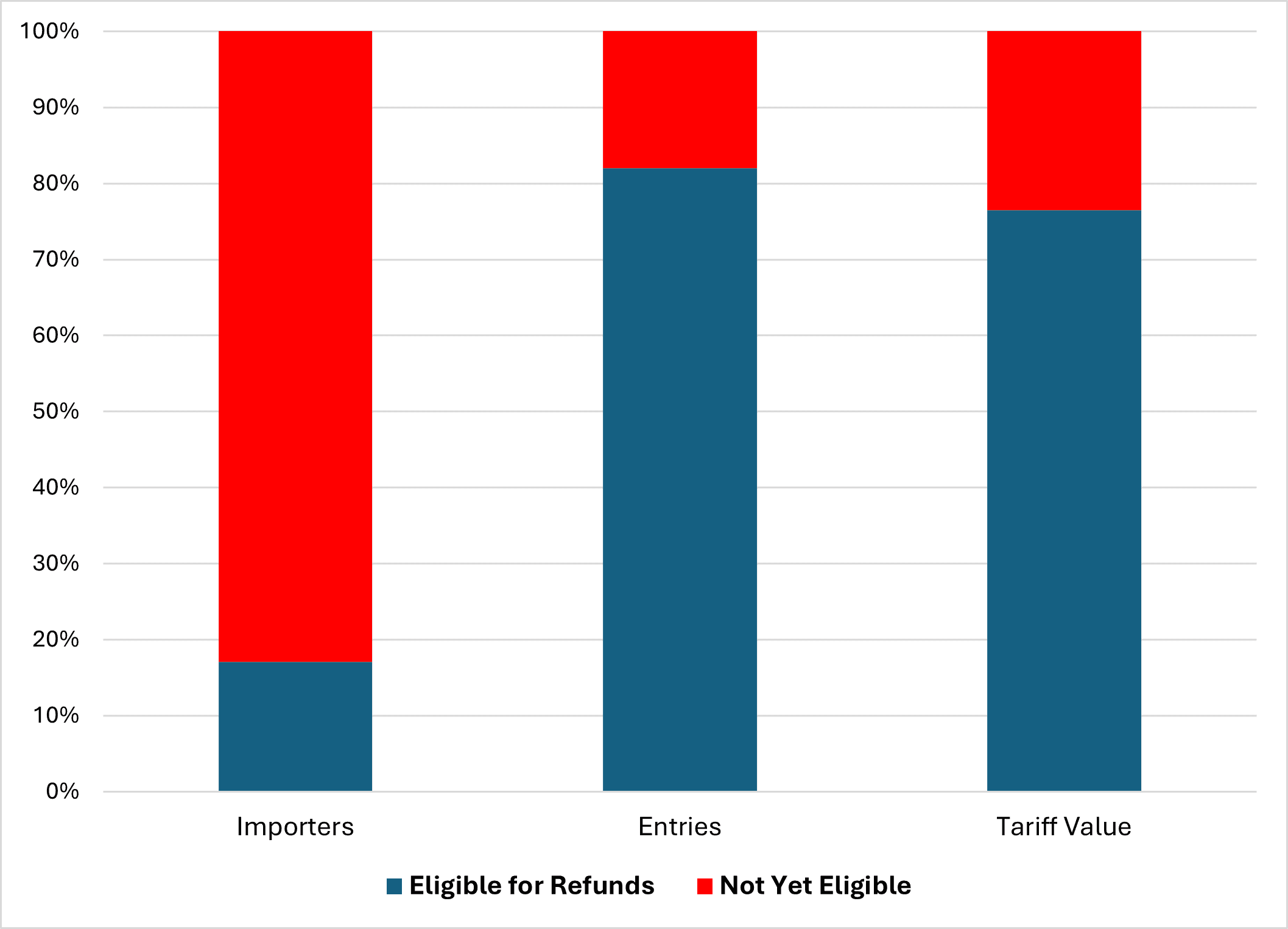
Source: United States Court of International Trade Court Documents; Court Documents
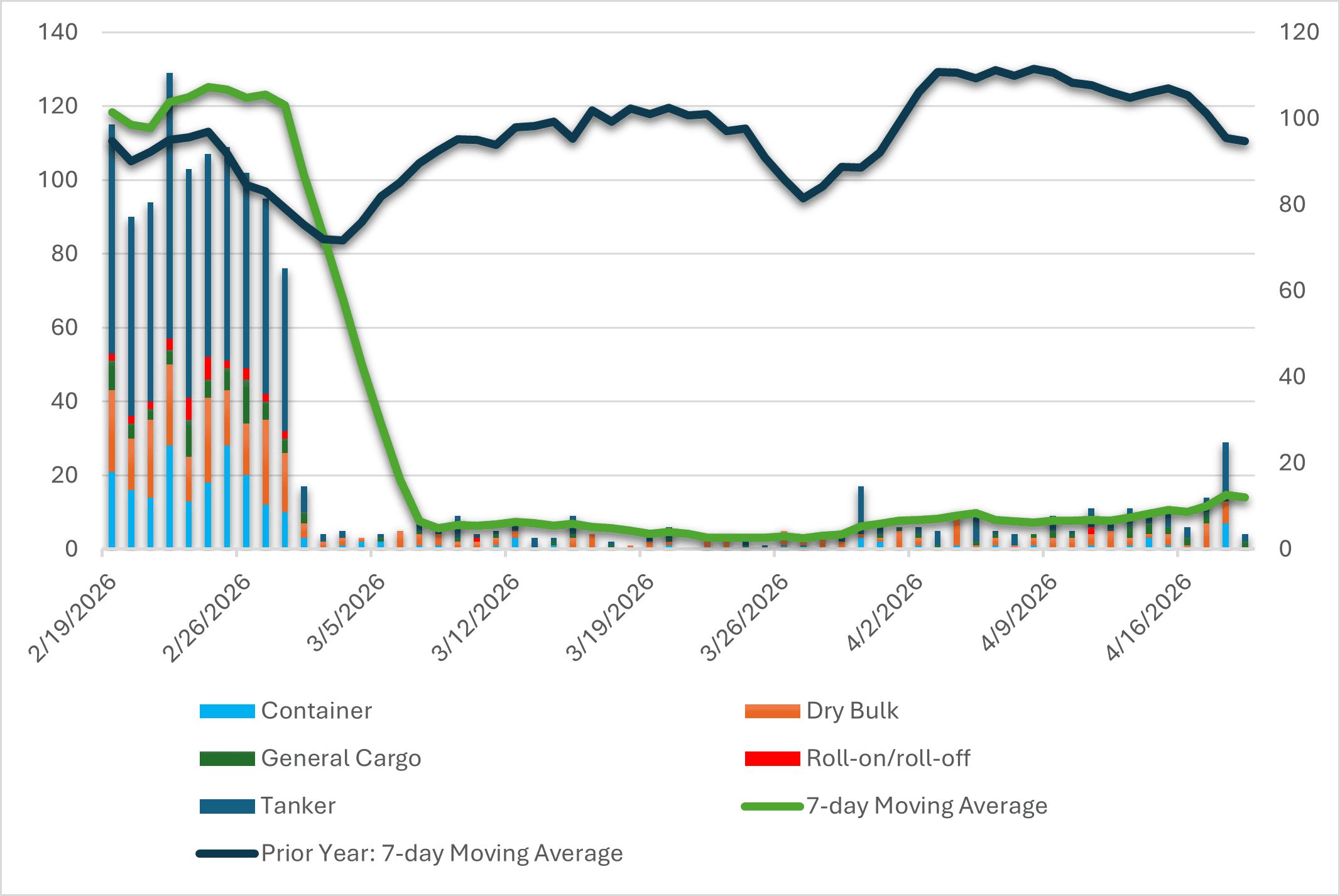
Figure 2: Strait of Hormuz Transit Calls by Number of Ships (Through April 19, 2026)