The Shipment
May 7, 2026
Pointless Coffee Tariffs
(Not So) Fun Fact: As of today, the U.S. national average gas price sits at $4.56 – roughly 6 percent higher than last week and nearly 55 percent higher compared to the beginning of the Iran conflict.
A Refund Case Study: Pointless Coffee Tariffs
What’s Happening: International Emergency Economic Powers Act (IEEPA) tariff refunds through the Consolidated Administration and Processing of Entries (CAPE) portal are now in full swing. This week Customs and Border Protection (CBP) gave updates on CAPE, highlighting that many importers may begin to receive refunds starting May 12. Some companies have already begun to receive refunds as of May 6, a markedly faster rollout than CBP initially forecast and far earlier than the Shipment expected. As the government continues to pay back U.S. companies, consumers should eventually begin to feel relief as businesses gradually pass along cost savings. (Although it’s worth noting that because consumer prices are driven by myriad factors, the savings may not be obvious or widely felt.) Since these refunds will include more than 53 million different import entries from 330,000 importers, rebates will have indirect downstream impacts on a wide range of industries and products ranging from shoes sold in an outlet mall to beverages sold at a grocery store. While refunds are intended to make U.S. businesses and consumers whole again, the Office of Management and Budget has estimated that refund requests will require well over 500,000 labor hours from importers – a sizable cost to obtain owed funds.
Why It Matters: One case study that highlights both the scale of refunds and part of the futility of the IEEPA tariff regime is the coffee industry. As covered last summer, the amount of tariffs calculated on U.S. coffee imports surged during the IEEPA regime. Tariff costs totaled approximately $965 million between March and November of 2025, representing a more than 16,000-percent increase compared to the same period in 2024. After widespread affordability concerns grew over the course of 2025, the Trump Administration exempted a wide variety of agricultural imports from IEEPA tariffs in November 2025. These exemptions included most import codes associated with coffee and brought the average tariff rate from its peak of 19.5 percent in October to approximately 1.4 percent in February when IEEPA tariffs were struck down entirely by the Supreme Court. Even the comparatively low rate in February is still well-above the 0–0.1 percent average tariff before “Liberation Day.”
This coffee-tariffs venture begs the question of what it actually accomplished, considering the tariffs raised already exorbitant coffee costs, were mostly abandoned by the administration after consumer complaints, and are now expected to be refunded entirely. Did the coffee tariffs reduce the coffee trade deficit? No, total imports continued to grow year-over-year despite the tariffs due to Americans’ insatiable caffeine addiction. Did the coffee tariffs encourage domestic production? No, there was precisely a 0-percent increase in U.S. coffee production in 2025 and this is expected to remain the case in 2026. Did the coffee tariffs raise government revenue? Yes, the Shipment estimates that an additional $1 billion was raised from the Trump Administration’s tariffs on coffee, but of course this money now has to be paid back to importers with interest. Both businesses and the government will be worse off as they have to waste hours dealing with the refund process. Notably, the coffee exemptions were carried over to the current Section 122 tariff regime that was established shortly after IEEPA ended, meaning the average tariff rate going forward should be close to 1 percent.
Looking Ahead: Coffee will be one of many impacted products to watch in the months ahead to see the effect tariff refunds might have on prices for consumers. It serves as just one example of why the administration – if tariffs are a nonnegotiable tool – should be much more intentional with its trade policy going forward.
Figure 1: U.S. Coffee Imports and Tariff Rates by IEEPA Exemption Status
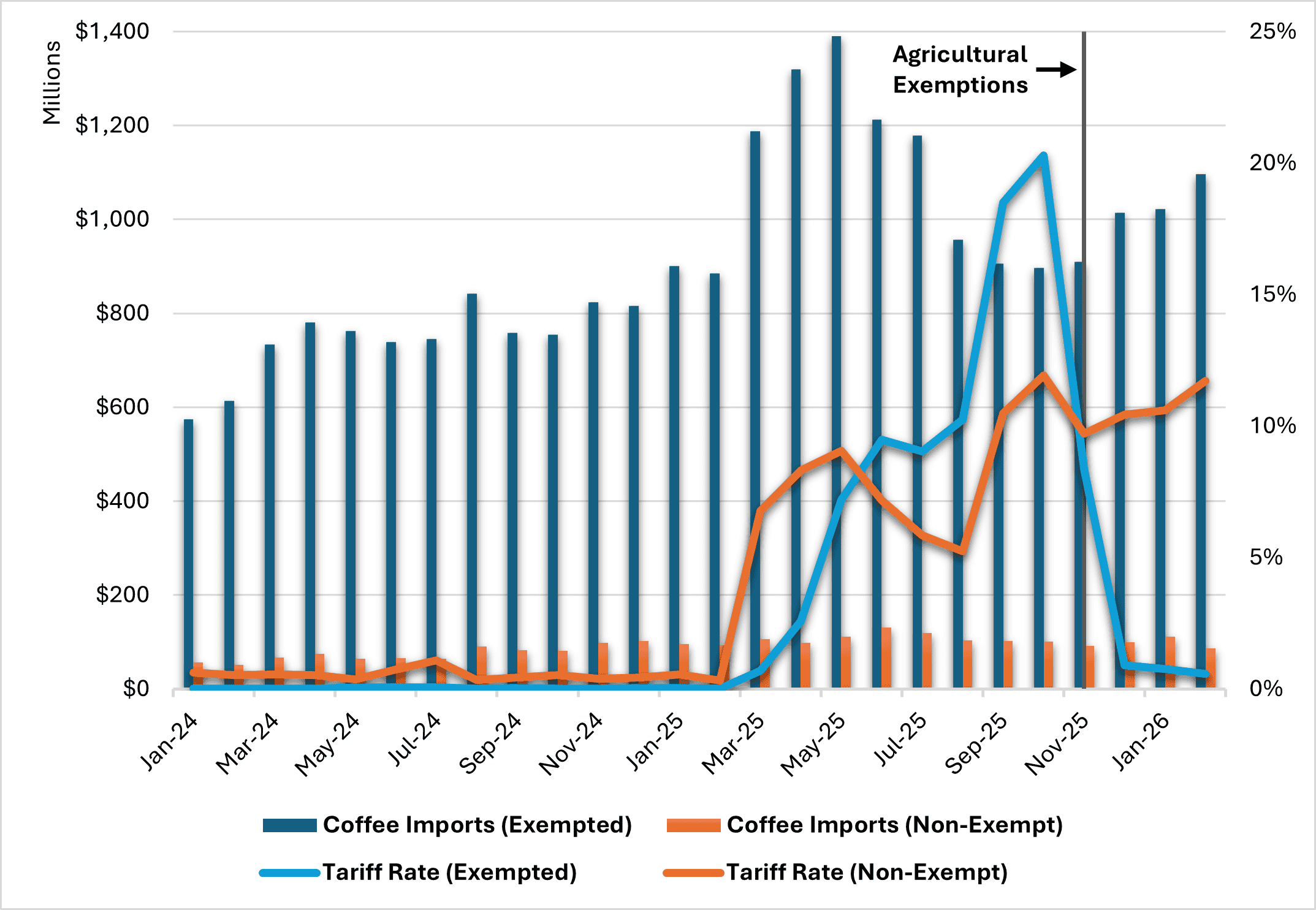
Source: The United States International Trade Commission (Exempt vs Non-Exempt from IEEPA Beginning in November 2025)
Figure 2: Consumer and Producer Measures of Inflation for Coffee
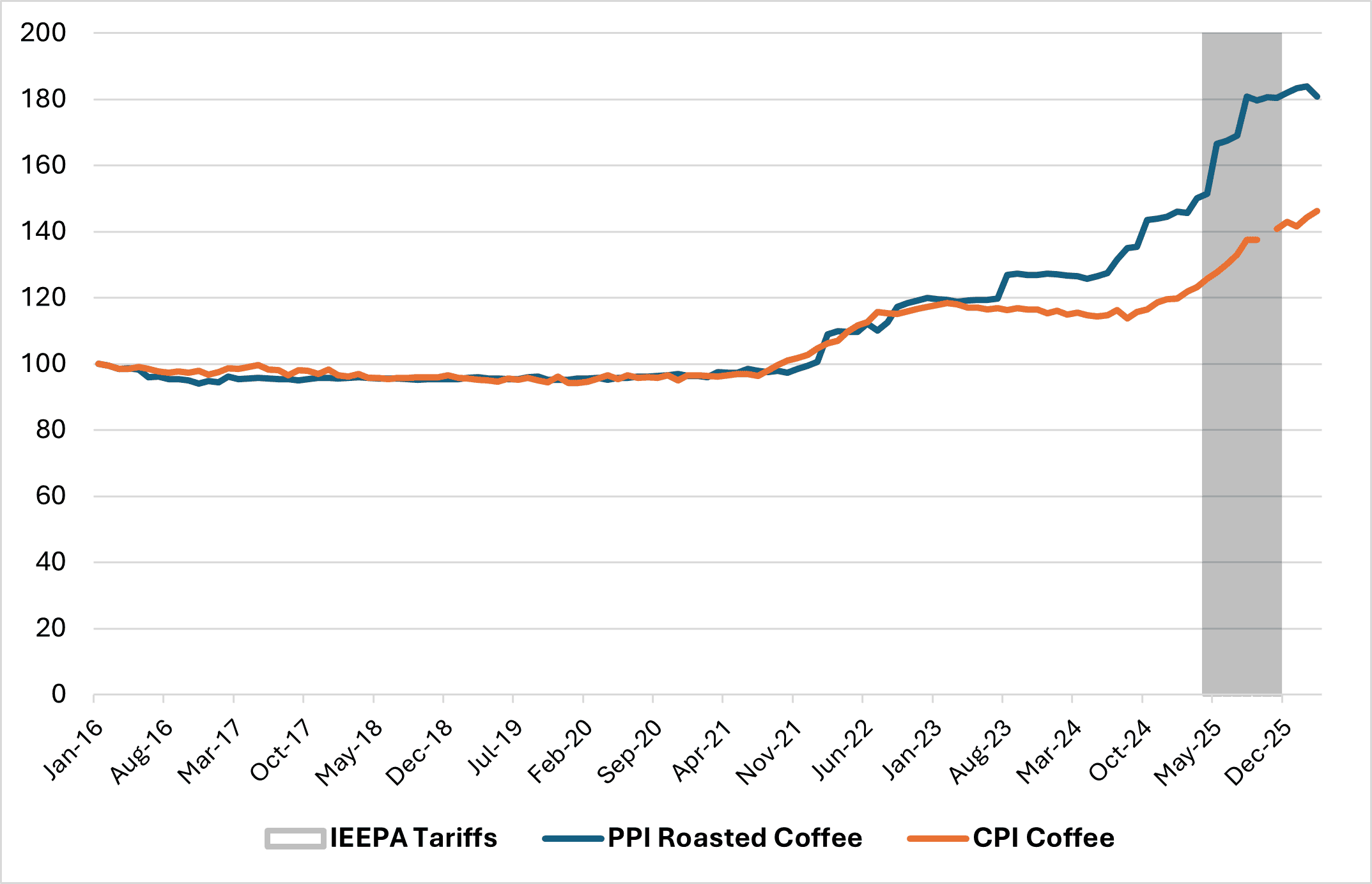
Source: FRED CPI Data, FRED PPI Data