The Shipment
April 30, 2026
Tariff Refunds Roll Out
(Not So) Fun Fact: As of today, the U.S. national average gas price sits at $4.30 – roughly 7 percent higher than last week and about 45 percent higher since the beginning of the Iran conflict.
Tariff Refunds Start Rolling
What’s Happening: This week, the United States Customs and Border Protection (CBP) released a court filing with status updates on the International Emergency Economic Powers Act (IEEPA) tariff refunds. The refund process goes through the Consolidated Administration and Processing of Entries (CAPE) portal which is accessed through the Automated Commercial Environment (ACE) Secure Data Portal. Despite error-message hiccups related to a high volume of traffic (70 percent higher than the previous record) on CAPE, businesses are beginning to enter the refund process and signal to markets that they expect large returns, with General Motors anticipating nearly $500 million. In the first week of implementation, close to 1.75 million individual import entries have officially entered the refund process. As the process chugs along, public discourse has begun to center around whether companies will extend tariff rebates to consumers who likely paid at least a portion of the IEEPA tariff costs. Unsurprisingly, some members of Congress have capitalized on this uncertainty, with one piece of legislation proposing direct-to-consumer refunds.
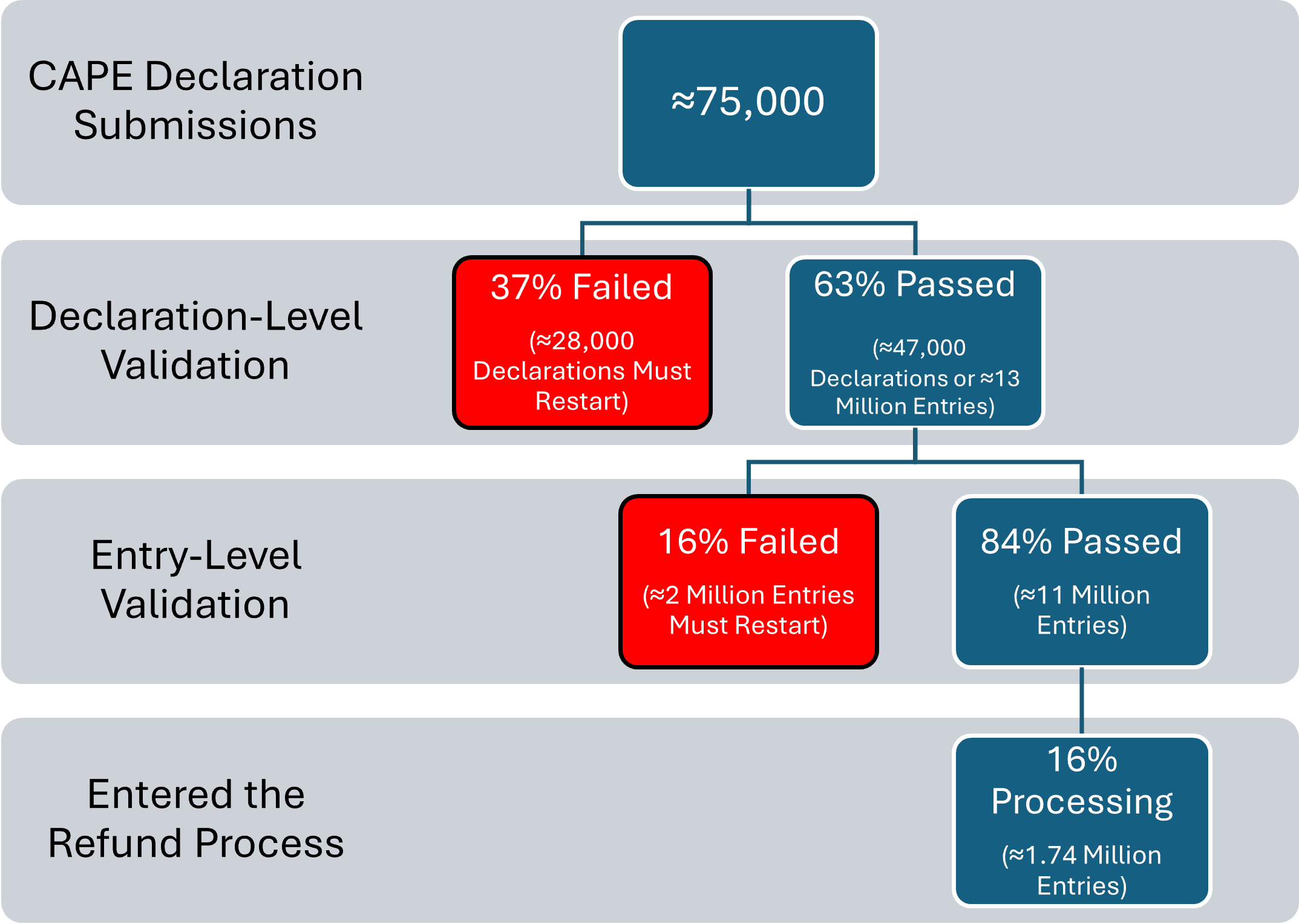
Why It Matters: The largest tariff refund in history is now fully underway. When complete, it should include 330,000 importers, 53 million import entries, and more than $166 billion. As of the April 26 court filing, importers submitted a total of 75,306 separate CAPE declarations. In each CAPE declaration, an importer can submit up to 9,999 individual import entries, as long as all are eligible for IEEPA tariff refunds. Refund requests are validated at the declaration level – during which identification, formatting, and other higher-level information is reviewed – as well as the entry level – during which qualifications, tariff rates, and other specific information is checked. Of the 75,306 CAPE declarations, just 47,315 (63 percent) passed the declaration-level validation process. The validated declarations include 13,347,321 import entries; of these entries, 11,222,927 (84 percent) passed the entry-level validation process. Thus, more than 11 million entries have been accepted to receive refunds, and in fact, CBP has stated that 1,740,000 (16 percent) of these have already entered the refund process. It is unclear precisely how many importers or the amount of tariff value this represents as CBP did not specify that data. The Shipment estimates the value of accepted refunds could be between $32.7–$45.7 billion, with another estimate putting it at $35 billion. These figures indicate that tariff refunds currently being processed amount to approximately $5–$7 billion.
There are two major takeaways on how the process has operated so far. Starting with the positive, the number of import entries that have entered the refund process within one week is far larger than the Shipment would have anticipated. It was previously estimated that CBP’s validation process could take 2–4 weeks, so the quicker processing time suggests that either validation is faster than expected, many cases may be simpler to validate, or some combination of the two. As for the negative, there are a substantial number of CAPE declarations and import entries that are failing the validation process. This will certainly lengthen the overall refund process and exacerbate opportunity costs (companies spending resources on refunds rather than productive activities). On the other hand, it is possible that some submissions are invalid requests that do not deserve IEEPA refunds. For example, some businesses may be inaccurately requesting refunds associated with tariff authorities other than IEEPA or bypassing the importer of record that is actually eligible to receive a refund.
Looking Ahead: Given the current pace of CAPE, importers might start receiving the first wave of refunds as soon as the week of June 20, which is earlier than the Shipment’s previous estimate of July 4. It is likely that the bulk of refunds accepted so far will come closer to mid-July or early August, with the speed depending on the length of the validation process. Notably, it is highly possible that as time goes on, more difficult, time-consuming cases will arise that slow down the process.
Figure 1: Status of the IEEPA Tariff Refund Process (As of April 26, 2026)
Source: United States Court of International Trade Court Filings
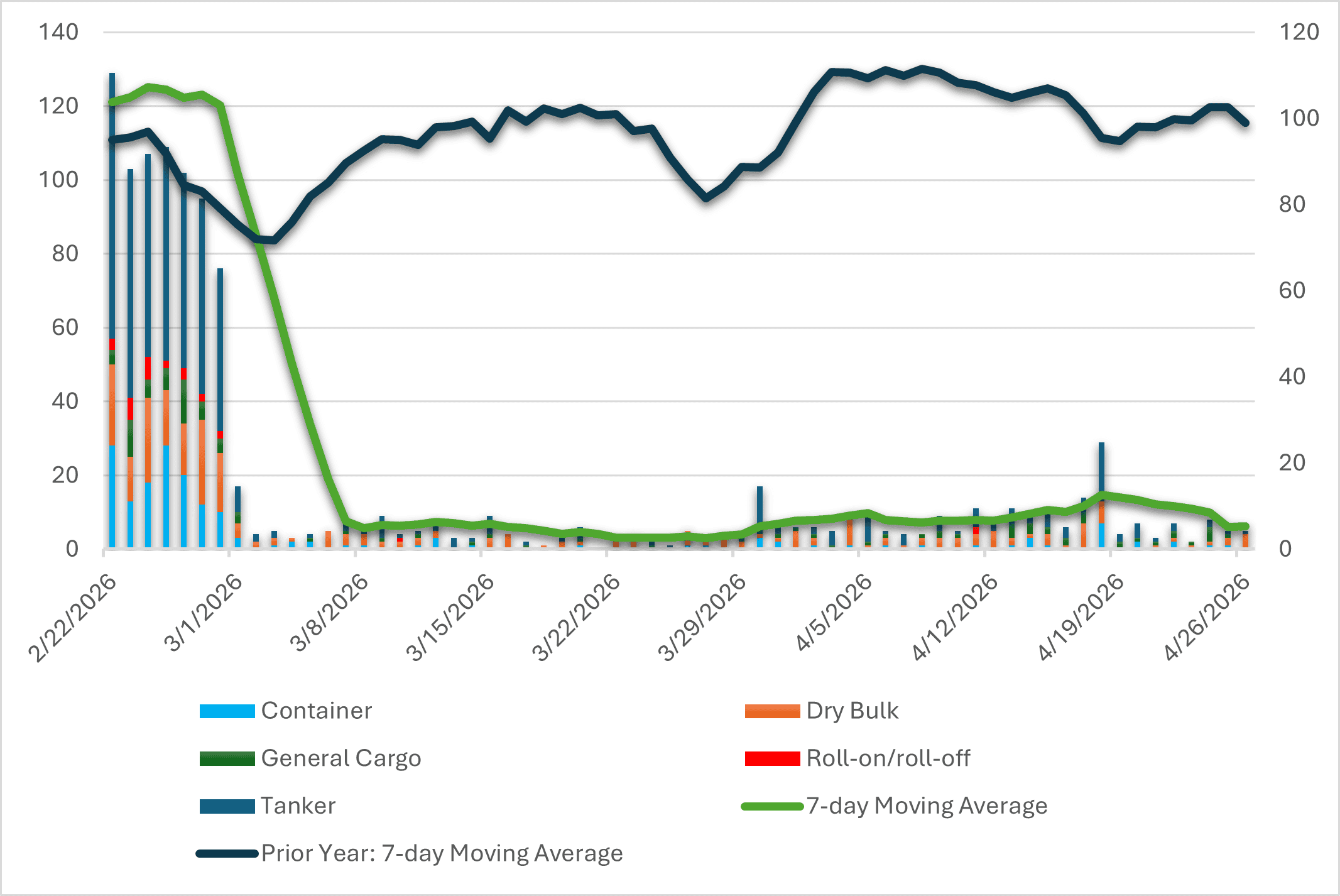
Figure 2: Strait of Hormuz Transit Calls by Number of Ships (As of April 26, 2026)