The Shipment
May 29, 2025
Court Strikes Down Tariffs and EU Ramps Up Trade Talks
The End of IEEPA Tariffs?
What’s Happening: The U.S. Court of International Trade ruled yesterday that the “Liberation Day” tariffs and the fentanyl trafficking tariffs the Trump Administration imposed on Mexico, Canada, and China exceed the president’s authority as laid out in the International Emergency Economic Powers Act (IEEPA). This decision, which was appealed by the administration an hour or so later, blocks President Trump’s use of IEEPA to impose his April 2 deluge of tariffs, at least for now. While the president has yet to officially comment on the court’s decision, his National Economic Council director stated this is only a hiccup in the trade agenda.
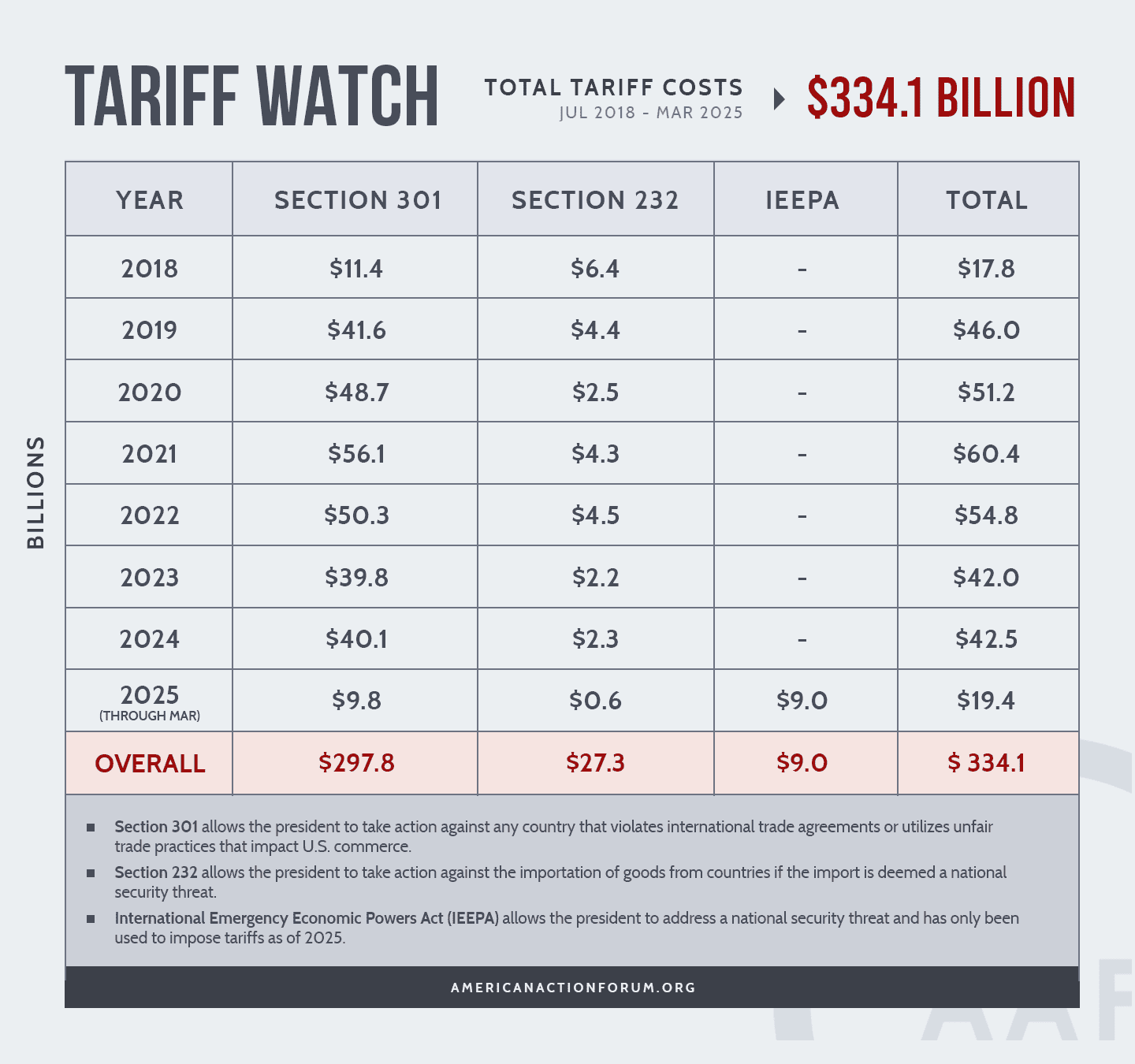
Why It Matters: If the court’s ruling holds, it would eliminate around 90 percent of the overall tariff costs imposed by the Trump Administration since January. Putting aside the immense economic benefits for U.S. consumers and businesses, this court ruling marks one of the most consequential decisions for trade law and executive authority over trade in the modern era. In the court documents, the judges cite the Constitution, which gives Congress the power to enact tariffs, as well as Federalist No.48, which argues that one branch should not completely perform the duties belonging to another branch (in other words, a balance of powers argument). These are the two rationales the court provided to explain why the president does not have the ability to “impose unbounded tariffs” via IEEPA. Of particular note, the court holds that the administration’s fentanyl trafficking tariffs do not adequately deal with the declared national emergency – the Trump Administration may argue persuasively upon appeal that such judgment is the sole prerogative of the executive branch – while the “Liberation Day” tariffs were designed with apparently no limits to their scope, thus exceeding the authority IEEPA provides. Therefore, the court not only reaffirms the separation of powers and the legislative branch’s authority over tariffs but also that IEEPA may no longer be an avenue for imposing broad-based tariffs in the way President Trump has. This still leaves the Trump trade team with several other tariff authorities in its arsenal, such as Section 232 (imposed on steel, aluminum, and autos) and Section 301 (imposed primarily on imports from China). The president could also invoke Section 122, a thus far untested option, which allows a 15-percent tariff for 150 days to address trade deficits.
Looking Ahead: The battle over Trump’s use of IEEPA tariffs remains unresolved, leaving U.S. importers in a state of limbo. The administration is in the process of appealing the ruling and may argue that it maintains the authority to continue collecting tariff revenue. Specifically, the administration may focus on the fact that Congress delegated authority to the executive branch to respond to a declared emergency, allowing the president to unilaterally respond when crafting trade policy. The appeal will undoubtedly go to the Supreme Court, which will have to decide how much delegation of authority is truly allowed between the legislative and executive branches. That final ruling will create a precedent that will not only be important for the remainder of Trump’s term but for students of law (and history) in the decades to come.
European Union: Trade Deal or Tariffs?
What’s Happening: Because trade negotiations were apparently going nowhere, President Trump threatened the European Union (EU) on May 23 with an across-the-board 50-percent tariff starting on June 1. As quickly as the proposal was posted, it was revised to extend the negotiating window until July 9, the initial end date for the “Liberation Day” tariff pause, now stymied, as noted, in court. According to the European Commission, EU negotiators intend to “fast-track” trade talks. The EU team will be headed by European Commissioner for Trade Maros Sefcovic, while Commerce Secretary Lutnick and U.S. trade Representative Greer will lead the U.S. trade team, which is already heavily overextended.
Why It Matters: The EU is the United States’ largest trade partner, representing around 18 percent of both U.S. imports and exports as of 2024. The Shipment estimates that a 50-percent tariff on all imports from the EU would end up costing U.S. consumer approximately $120 billion in the first year of implementation, although the federal government’s tariff revenue would see a gradual decline as consumers shift away from European products – which might have the unintended consequence of making Chinese goods comparatively cheaper. Farmers and manufacturers are also at risk if a trade war escalates: There are currently multiple rounds of EU retaliatory tariffs on pause that will hit U.S. exports if a trade deal falls through, amounting to over $25 billion in goods. An additional $100 billion in U.S. products are currently being examined by the European Commission, meaning even broader retaliation may be on the table. And while services are usually immune to tit-for-tat trade escalations – which typically focus on manufacturing and agriculture – that may change in the event of a large-scale trade war, as German Chancellor Merz threatened potential action against U.S. technology companies this week. (Trump, too, has threatened a tariff on foreign films.) In any case, greater trade tensions between these two economic heavyweights would not end well for the global economy, ultimately reducing the standard of living for U.S. households, which would face more expensive products from emptier store shelves.
Looking Ahead: What would a resolution to these tensions look like? Assuming the recent court decision is ignored, there are two likely scenarios, at least based on the previous U.S.-UK trade deal and past tariff threats. The first is that a rushed, haphazard trade deal is reached in the final days leading up to the July 9 deadline that avoids the exorbitant costs of a 50-percent tariff. The second is that a rushed, haphazard trade deal is reached a few days after the deadline in order to mitigate the economic costs, in a way similar to the very temporary tariff announcement on Canada and Mexico. In either case, it is almost certain that a baseline 10-percent tariff will remain in place as non-negotiable, a roadblock when it comes to a real trade agreement. Any non-tariff barrier reductions will also likely be limited in scope and more symbolic to allow the administration to declare victory in the headlines rather than secure long-term economic gains. The likelihood of a further extension or a drawn-out tariff war remains low unless “Liberation Day” tariffs are extended for all trade partners, or the Trump trade team shifts back toward a hardline tariff regime.
|
Country |
Exports to U.S. as Percent of GDP | Exports to U.S. ($ billions) |
Imports from the U.S. ($ billions) |
| Ireland |
17.3% |
$99.9 |
$16.5 |
| Slovenia |
8.7% |
$6.3 |
$0.3 |
| Slovakia |
5.8% |
$8.1 |
$0.6 |
| Hungary |
5.6% |
$12.5 |
$3.3 |
| Belgium |
4.1% |
$27.6 | $34.2 |
| Germany |
3.4% |
$160.3 |
$75.6 |
| Austria |
3.3% |
$17.4 |
$4.5 |
| Italy |
3.2% |
$76.2 |
$32.4 |
| Sweden |
2.9% |
$17.8 |
$8.2 |
| Finland |
2.7% |
$8.1 |
$2.6 |
| Netherlands |
2.6% |
$32.0 |
$89.6 |
| Estonia |
2.5% |
$1.1 |
$0.4 |
| Lithuania |
2.4% |
$2.0 |
$1.9 |
| Denmark |
2.3% |
$10.0 |
$5.8 |
| Czechia |
2.3% |
$7.8 |
$4.3 |
| Portugal |
2.1% |
$6.5 |
$3.0 |
| France |
1.9% |
$60.1 |
$43.5 |
| Poland |
1.5% |
$13.5 |
$12.0 |
| Latvia |
1.5% |
$0.6 |
$0.5 |
| Bulgaria |
1.3% |
$1.5 |
$0.5 |
| Spain |
1.2% |
$21.0 |
$23.9 |
| Croatia |
1.1% |
$1.0 |
$1.0 |
| Romania |
0.9% |
$3.6 |
$1.3 |
| Greece |
0.9% |
$2.2 |
$2.6 |
| Malta |
0.9% |
$0.2 |
$0.4 |
| Luxembourg |
0.8% |
$0.7 |
$1.1 |
| Cyprus |
0.2% |
$0.1 |
$0.2 |