The Shipment
April 9, 2026
Pharmaceuticals, Metals, and a Ceasefire
(Not So) Fun Fact: As of today, the U.S. national average gas price sits at $4.17 which is a roughly 40 percent increase since the beginning of the conflict with Iran.
“Liberation Day” Two: Pharmaceuticals and Metals
What’s Happening: On the one-year anniversary of “Liberation Day,” President Trump announced new Section 232 national security tariffs on patented pharmaceuticals and completely overhauled Section 232 tariffs on steel, aluminum, and copper. The executive order imposing tariffs on certain pharma products and associated active pharmaceutical ingredients (APIs) comes 366 days after the initial 232 investigation began, with the tariffs taking effect on July 31 for certain large companies and September 29 for all others. The newly updated metal tariffs took effect on April 6 and are intended to simplify compliance, creating “buckets” of products based on their metal content and adding numerous additional exemptions. The tariff rates for most products range from 15–50 percent. Russian aluminum faces a 200-percent tariff while imports made with U.S.-origin metals face a 10-percent tariff. Previously, these 50-percent tariffs had been imposed on the value of the metal content of products, adding complexity for some importers which had to determine what percentage of their import was steel, aluminum, or copper. Additionally, the administration has suspended the “inclusion process” to limit the number of products subject to tariffs going forward. The administration had been expanding the metal tariffs via this process which allowed U.S. businesses to lobby for metal derivative products to be hit with a tariff.
As a reminder, the steel and aluminum tariffs – initially implemented during President Trump’s first term – were raised to 25 percent on all trade partners back in March 2025 and were doubled to 50 percent in June. Meanwhile, the copper tariff is a new construct of the current administration, with the 232 investigation beginning in March 2025 and the tariff implemented in July 2025.
Why It Matters: The impending 100-percent pharma tariffs and updated metal tariffs represent a mixed bag in terms of economic impact. Prior to the recent pharma tariff announcement, it was unclear how many imports would be tariffed, meaning up to $335 billion in U.S. imports were on the chopping block (using 2025 data). According to the recent executive order, generics, biosimilars, specialty pharma products, and other associated ingredients are exempt from tariffs, lowering impacted pharmaceutical and API imports to roughly $200 billion. This figure is further reduced through exemptions provided to 17 companies that have reached, or are working toward, a deal with the administration. Companies that both onshore and agree to most-favored-nation (MFN) pricing for their products in the United States are granted a 0-percent tariff rate for their imports through January 20, 2029. Additionally, companies that agree to onshore but not to MFN pricing face a reduced tariff rate of 20 percent. The average tariff rate is further reduced by trade deals with the European Union, Japan, South Korea, Switzerland, and Liechtenstein, all of which have a tariff rate cap of 15 percent. A separate pharma pricing deal with the United Kingdom (UK) grants a 0-percent tariff rate for the country. Examining just the country-specific trade deals, approximately $21 billion worth of imports could be subject to the full 100-percent tariff (see Figure 1). Factoring in company-specific exemptions would reduce the total impact further, but it is difficult to estimate company-by-company imports. One estimate suggests that roughly $12 billion in imports will be subject to the full 100-percent pharma tariff while all remaining imports would be subject to far lower rates or be entirely exempt. (Read more on the pharma tariff from AAF’s Michael Baker)
As the Shipment covered in February, the new Section 232 tariff regime for steel, aluminum, and copper creates three general “buckets” of impacted products and lists many more exemptions. Imports that are primarily made out of any of these metals face a 50-percent tariff while imports made substantially but not entirely out of the metal face a 25-percent tariff. Each of these tariffs is on the entire value of the product rather than the metal content, meaning the new system will raise the overall tariff burden for some products but lower it for others. The third category includes industrial equipment and electrical grid equipment which will face a temporary 15-percent tariff until the rate increases to 50 percent in 2028. Finally, more than 200 products made of 15 percent or less of each respective metal are now excluded from these Section 232 tariffs, representing approximately $80 billion in imports. Other caveats include lower rates of 15–25 percent for imports from the UK as well as 10-percent tariffs for foreign goods made from U.S.-origin metals. According to the Shipment’s calculations, the newly updated tariffs on metal imports and their derivatives will amount to $30 billion in annual costs for U.S. businesses and consumers, an increase of just under $3 billion from the previous system. The tariff cost estimate will likely be slightly lower when factoring in the lower tariff rate for U.S.-origin metal imports.
Looking Ahead: The pharma and metal tariffs are substantial additions to the reconstruction of the Trump Administration’s tariff regime. They mark noticeable but not extreme cost increases for U.S. consumers and businesses and the vast exemptions signal that the administration is wary of adding to cost pressures, particularly in the lead up to this year’s midterm elections. Further exemptions or lower rates could also be introduced in the upcoming review of the United States-Mexico-Canada Agreement or with specific countries that have trade deals. The next possible Section 232 tariff news may come as early as May since the Shipment expects movement surrounding the 232 investigation on aircraft and aircraft parts.
In Other News
The U.S.-Iran Ceasefire and the Strait of Hormuz: On Tuesday night, President Trump announced a two-week ceasefire with Iran, sending global markets higher and U.S. oil prices down to around $95 a barrel from $115. Despite hope that the ceasefire will reopen the Strait of Hormuz, traffic remains largely at a standstill due to the continued uncertainty. Shipping companies such as Maersk have stated that the ceasefire “does not yet provide full maritime certainty” and industry experts suggest it will be weeks if not months before shipping returns to normal levels. While most tankers and cargo ships maintain a cautious approach to transiting the strait, the Iranian regime may be working to institute a new toll of up to $2 million per vessel going forward. This would be an extremely costly measure for global shipping, amounting to close to $70 billion in additional annual costs based on historic flows. Meanwhile, energy infrastructure in the Middle East remains damaged as a result of the conflict and will take time to repair, replace, in order to ramp up production again. As of today, the U.S. national average gas price sits at $4.17 which is a 2 percent rise in just one week and a 20 percent increase from one month ago.
Section 122 Court Case: Oral arguments in one of the court cases against President Trump’s newly imposed 10-percent Section 122 tariffs are expected to take place tomorrow April 10. This case includes 24 U.S. states and will argue that the president has misused the authority as there is no balance of payments imbalance justifying the imposition of tariffs. It is also likely that the case against these tariffs will discuss the fact they violate the universal and nondiscriminatory intention of Section 122 due to the various product-specific tariff exemptions. The Shipment expects a similar scenario as the previous court cases against the International Emergency Economic Powers Act, with the Supreme Court ultimately rendering a final decision on legality.
Figure 1: Pharmaceutical Tariff Impacted Imports (Not Factoring in Company Exemptions)
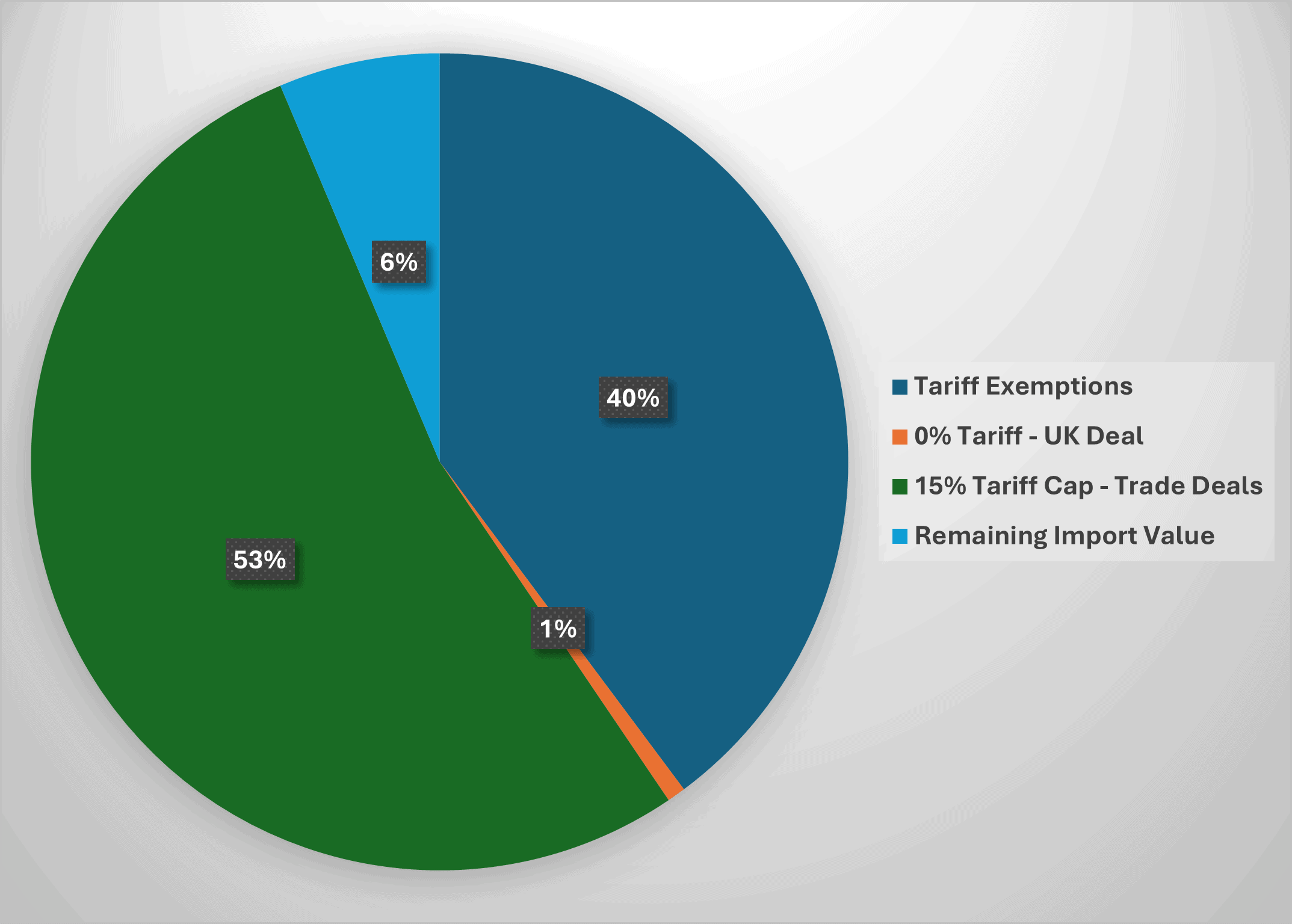
Source: United States International Trade Commission; The White House
Figure 2: Steel, Aluminum, and Copper Tariffs Impacted Imports
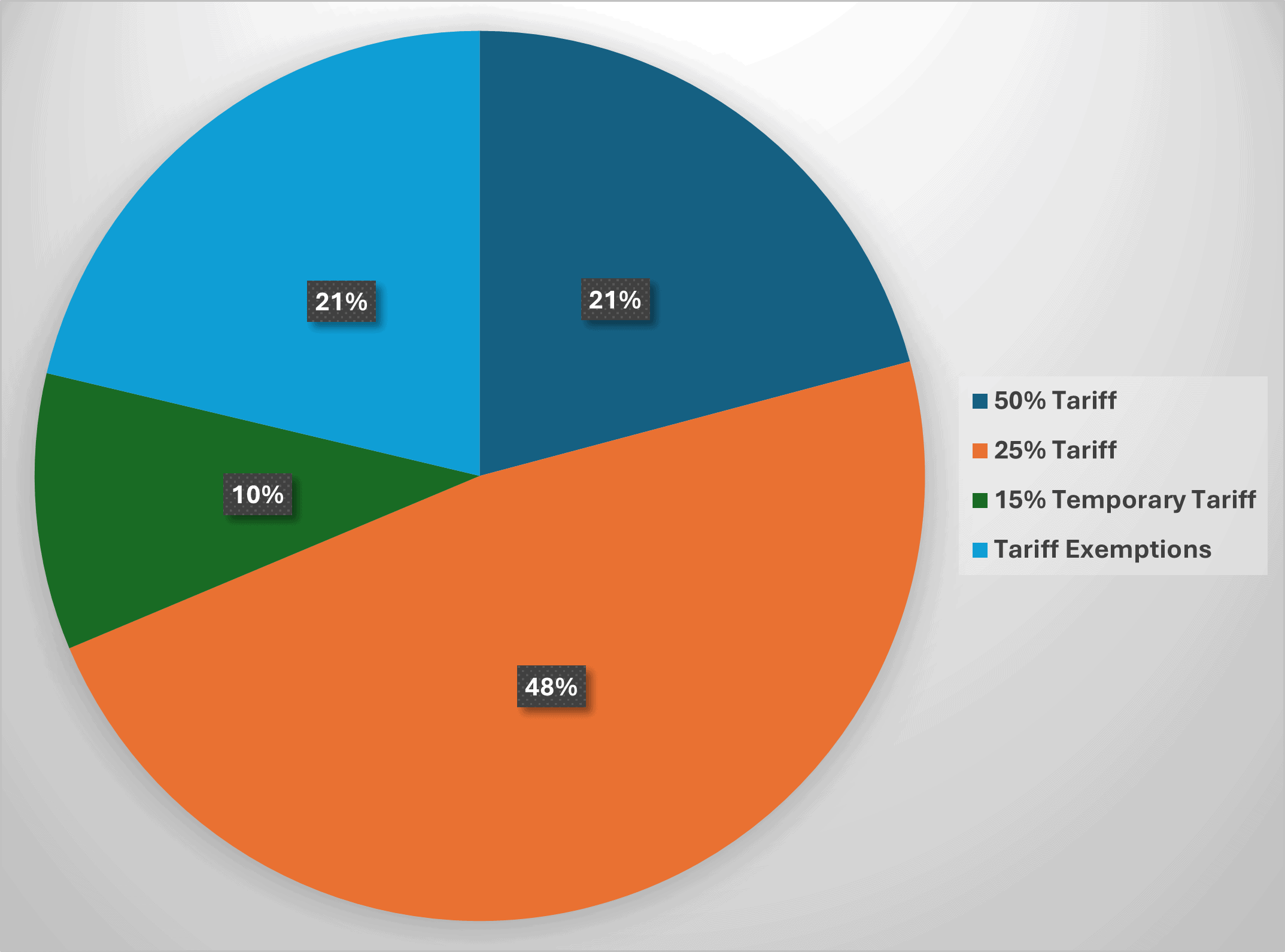
Source: United States International Trade Commission; The White House