The Shipment
April 17, 2025
The Little Tariff That Couldn’t Make Up Its Mind
Tariffs On, Tariffs Off
What’s Happening: On Friday April 11, businesses and consumers alike cheered when an announcement from Customs and Border Protection stated that smartphones, computers, and other electronics would be exempt from his newly implemented tariffs. The merriment was quickly quashed, however, when President Trump in a weekend Truth Social post clarified that no goods or countries will be “off the hook,” stating that these electronic imports are still subject to his 20-percent tariffs. In fact, Trump and his trade team went on to reiterate that separate tariffs on the semiconductor and electronics sector will be coming in the near future, as was foretold many weeks ago and reconfirmed on April 14.
Why It Matters: Given the current environment, it is a positive outcome that electronics are not subject to the 145-percent tariff levied against most Chinese goods, but a 20-percent hike is still a steep adjustment. A separate 25-percent tariff on semiconductors would cost U.S. businesses and consumers approximately $6 billion annually, with tariffs on additional electronics categories adding potentially tens of billions in costs and lost private-sector revenue. Importers and end-consumers in the United States would almost certainly bear most of the cost burden of a sector-wide tariff on semiconductors or related components due to their very limited substitutability. For example, while a business could substitute aluminum soda cans for plastic bottles, if necessary, there is no simple substitute for cutting edge semiconductors from Taiwan. Any plan to onshore new production in the United States will take years to manifest and will not solve any short-term disruptions in the electronics supply chain. It is also worth noting that certain inputs for semiconductors, such as critical minerals, cannot be found in the United States and have no current refinement capacity.
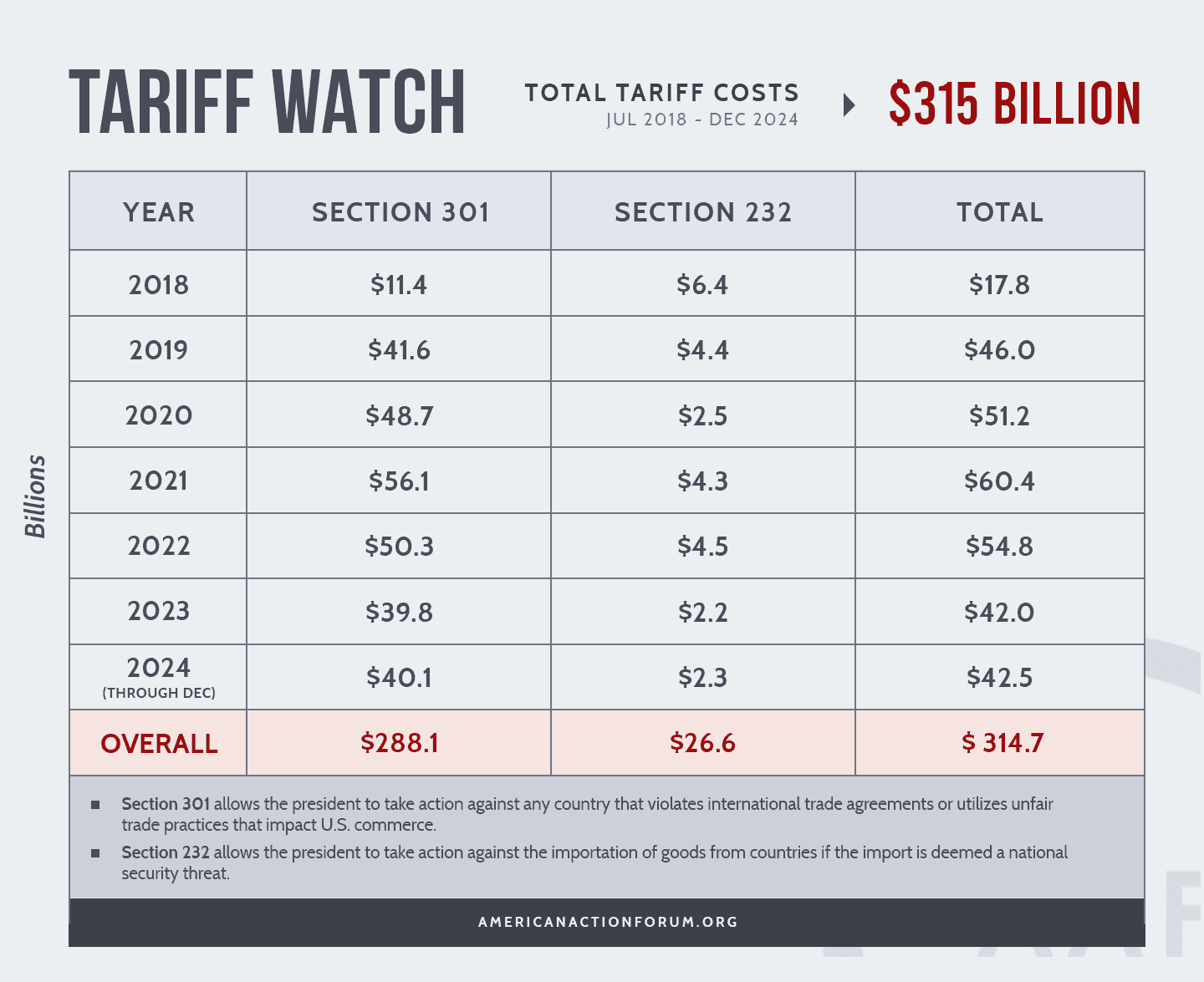
Looking Ahead: A tariff on the semiconductor sector is likely the first step in President Trump’s plan to impose additional Section 232 tariffs in the name of protecting national security. New tariffs on copper, lumber, pharmaceuticals, and minerals are fair game given the precedence set by Section 232 tariffs on automobiles, steel, and aluminum. If these sectoral tariffs come in the next 90 days, it is unclear what sort of ramifications there will be for ongoing trade negotiations with countries that are looking to mutually reduce trade barriers. The Shipment’s guess is that semiconductor tariffs will soon be followed by 25-percent tariffs on pharmaceuticals, and then copper, with both justified as a response to national security concerns.